
When a Commercial Tenant Stops Paying: What Florida Property Owners Should Know About Enforcing a Lease
If you own rental property in Florida and a tenant has stopped paying, the most useful thing to understand up front is this: a pause on eviction filings is

7/3/2026 | 1 min read
See If You Have a Strong Insurance Claim
Take our 2-minute qualifier and find out if you're a strong candidate for representation — at no cost.
See If You Qualify — Free Eligibility Check →No fees unless we win · Takes under 2 minutes · No obligation
When a Commercial Tenant Stops Paying: What Florida Property Owners Should Know About Enforcing a Lease
If you own rental property in Florida and a tenant has stopped paying, the most useful thing to understand up front is this: a pause on eviction filings is not the same thing as forgiveness of the rent. Those are two separate questions, and Florida property owners who assumed otherwise during the COVID-19 shutdowns sometimes wrote off money they may have had a path to pursue. A reported $2 million recovery in a California commercial lease dispute is a useful reminder of why that distinction matters, even though the case itself has nothing to do with Florida law.
Why this matters to you in Florida
Florida is a landlord-heavy state in the sense that a lot of ordinary people here own rental property. A retired couple with a duplex. A small business owner who bought the building next door. A family that turned an inherited house into a rental. When a tenant stops paying, none of those owners stop owing. The mortgage still comes due. So do the property taxes, the insurance premium (which in Florida is not a small line item), and the maintenance on a unit that is still being lived in or used.
During the pandemic, many Florida property owners watched tenants stop paying while eviction filings were delayed. Some concluded the money was simply gone. That conclusion is not automatically correct. Depending on the terms of any moratorium or relief program that applied, the language in the lease itself, and the facts of the default, rent that accrued during a nonpayment period may still be a debt the tenant owes. Whether it can actually be collected, and how, is a question worth putting in front of an attorney rather than answering for yourself with a guess in either direction.
That is the whole point of raising the California case here. Not because it controls anything in Florida. It does not. But because it shows that a landlord who documented a default and kept pursuing it did not necessarily walk away empty-handed.
What was reported
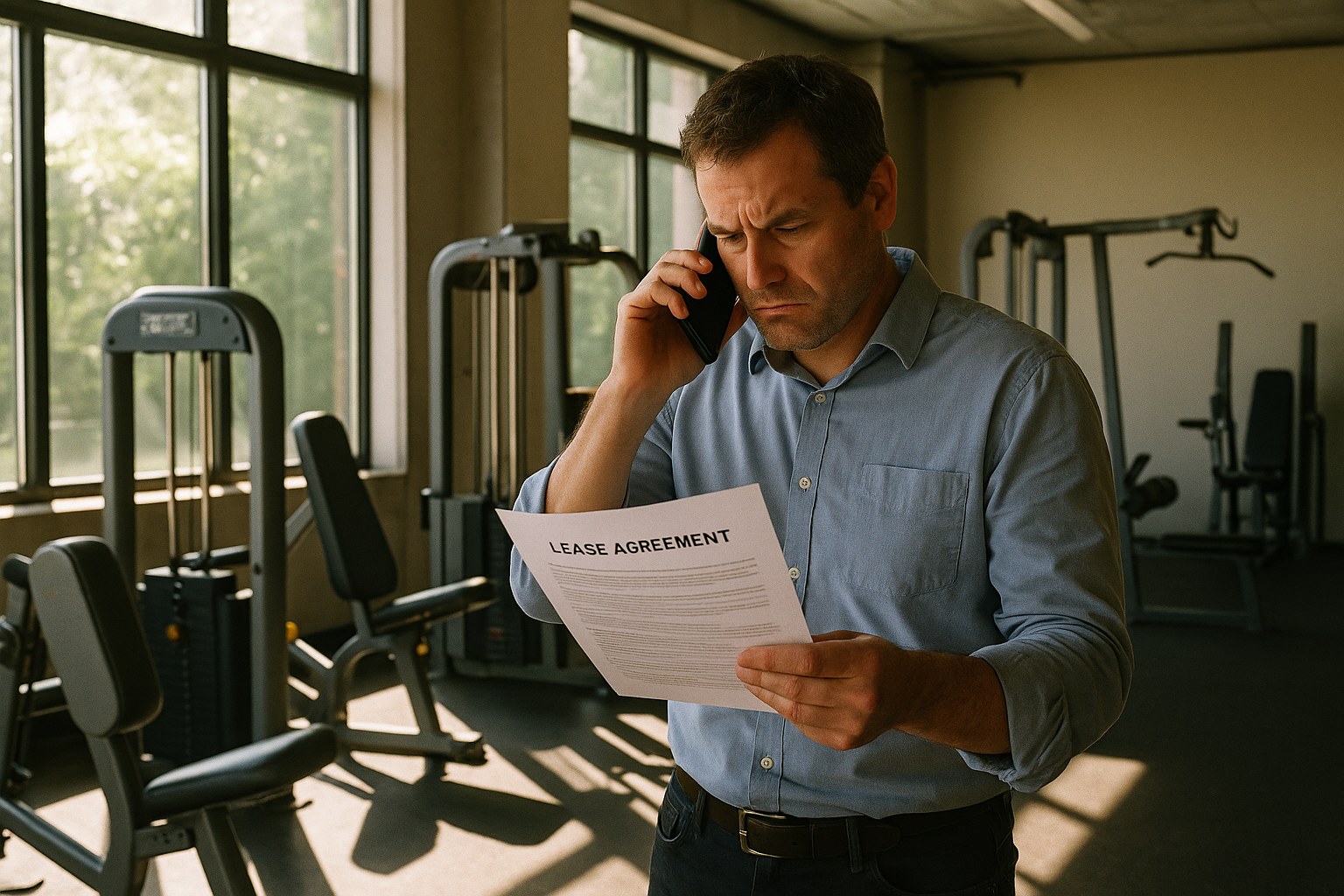
A news report describes Los Angeles eviction attorney Niv Davidovich securing a $2,000,000 recovery from a gym chain tenant in connection with a commercial lease dispute that arose during the COVID-19 pandemic. See Los Angeles Eviction Attorney Niv Davidovich Secures $2,000,000 From Gym Chain During COVID.
That is the extent of what the source supports. It is one reported outcome in one out-of-state matter, under California law, on facts that are not public. It is not a precedent, it is not a promise, and nothing about it tells you what would happen in a Broward County courtroom. Read it as an illustration of a principle, not as a prediction.
The rules that actually apply to you are Florida's
Florida landlord-tenant law, not California's, governs your lease. A few things Florida property owners in this situation generally should understand, with the caveat that every lease and every default is different:
Nonpayment cases usually start with a written notice. Under Florida's residential landlord-tenant framework in Chapter 83, Florida Statutes, a residential nonpayment case typically begins with a three-day notice demanding payment or possession before an eviction action is filed. Commercial tenancies are governed by a different part of the same chapter and can carry different notice requirements. Getting the notice wrong is one of the more common ways a case gets delayed or dismissed.
Possession and money are often separate questions. Getting a tenant out and collecting what they owe are not the same proceeding, and one does not automatically deliver the other. Depending on the circumstances, an unpaid balance may be pursued as a debt claim.
Commercial leases carry terms residential leases do not. Business tenants are frequently bound by personal guarantees, acceleration clauses, or specific default provisions. Those terms can meaningfully change what an owner can pursue, which is why the lease document itself is usually the first thing an attorney will want to read.
Documentation is what makes a claim workable. The ledger, the notices, the texts and emails, the lease. Records created at the time carry weight that a reconstruction after the fact does not.
Self-help is a serious risk. Florida law restricts landlords from changing locks, shutting off utilities, or removing a tenant's property outside the court process. Owners who try to shortcut the process can create liability for themselves and weaken the position they were trying to protect.
A broader point worth sitting with
Emergency policy tends to move fast and protect the party seen as most exposed. During COVID, that was tenants, and there were real reasons for that. But the design of those protections did not always account for the property owner still carrying a mortgage, an insurance premium, and a tax bill on a building that had stopped producing income. Obligations kept accruing on one side of the lease while the main enforcement tool was frozen on the other.
Florida sees more than its share of declared emergencies. Hurricanes, in particular, produce the same basic shape of problem: disrupted income, disrupted courts, disrupted payment. The practical lesson for Florida property owners is not about assigning blame for what happened five years ago. It is that the lease terms you sign now, the records you keep now, and the relationship you have with counsel before a problem starts are what determine how fast you can respond when the next disruption arrives.
If you are dealing with this now
If you are a Florida property owner facing a non-paying tenant, a lease default, property damage, or a dispute with a tenant or an insurer over a covered loss, it is worth talking through your options with an attorney before you act. Early steps, particularly around notice, tend to shape everything that follows.
Louis Law Group works with Florida property owners and policyholders on disputes involving property, leases, and insurance claims. You can reach the firm for a consultation to discuss your specific situation.
This article is general information only and is not legal advice. Reading it does not create an attorney-client relationship with Louis Law Group. Florida landlord-tenant law is fact-specific, and the out-of-state matter described above was decided under another state's law and does not indicate what result any Florida owner would obtain. Consult a licensed Florida attorney about your circumstances.
Sources
Is your insurance company handling your claim fairly?
Answer 5 questions. We'll analyze your claim against Florida property insurance law and show you exactly where you stand.
General information only, not legal advice. Based on Florida insurance law and claim best practices.
Get Your Free Property Damage Checklist
24-step claim guide — protect your rights after damage to your home
Free. No spam. Unsubscribe anytime.
Find Out If You Qualify — Free Case Review
No fees unless we win · 100% confidential · Same-day response
★★★★★ 4.7 · 67 Google Reviews
What Our Clients Say
Real reviews from real clients who fought their insurance companies — and won.
"Citizens denied our roof leak claim, but this firm fought for us and got money for our repairs. We even had funds left over after fixing the roof."
"Pierre and his team are amazing. They truly cater to their clients and help you get the most from your insurance company."
"When my insurance company denied my roof damage claim, Louis Law Group stepped in and fought for me. I'm extremely satisfied with the results they obtained."
"They accomplished exactly what they set out to do and helped me finally receive my insurance check."
"Louis Law Group handled our homeowners insurance dispute and got results much faster than we expected. Excellent service and great communication."
"Very professional attorneys with outstanding attention to detail. They will not stop fighting for their clients."
* Reviews from Google. Results may vary by case.
How it Works
No Win, No Fee
We like to simplify our intake process. From submitting your claim to finalizing your case, our streamlined approach ensures a hassle-free experience. Our legal team is dedicated to making this process as efficient and straightforward as possible.
You can expect transparent communication, prompt updates, and a commitment to achieving the best possible outcome for your case.
Free Case EvaluationLet's get in touch
We like to simplify our intake process. From submitting your claim to finalizing your case, our streamlined approach ensures a hassle-free experience. Our legal team is dedicated to making this process as efficient and straightforward as possible.
12 S.E. 7th Street, Suite 805, Fort Lauderdale, FL 33301