
What Florida Drivers Should Know After the CarShield FTC Settlement
You pay a monthly premium for what the radio spot called "bumper to bumper" coverage. The transmission fails on I-95 outside Fort Lauderdale. The administr

7/3/2026 | 1 min read
Warranty Claim Denied? See If You Qualify
Take our 2-minute qualifier and find out if your denied warranty or service-contract claim qualifies for representation — at no cost.
See If You Qualify — Free Eligibility Check →No fees unless we win · Takes under 2 minutes · No obligation
What Florida Drivers Should Know After the CarShield FTC Settlement
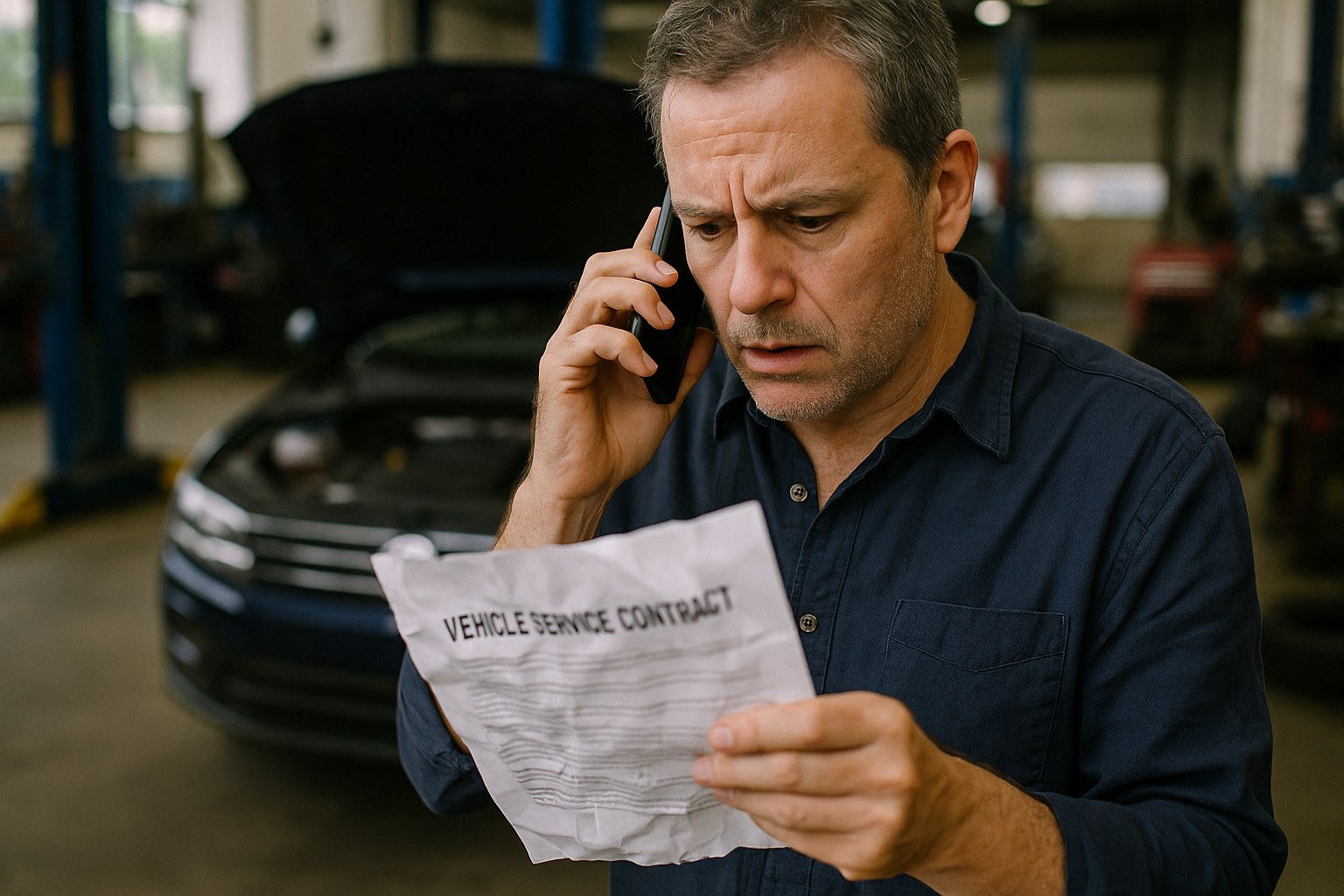
You pay a monthly premium for what the radio spot called "bumper to bumper" coverage. The transmission fails on I-95 outside Fort Lauderdale. The administrator tells you the repair falls under an exclusion you never noticed, or that a gap in your oil change records voids the claim. You are left with the repair bill and the payments you already made. If that sounds familiar, a federal settlement involving one of the industry's biggest advertisers is worth your attention, because it tells you something about the gap between the pitch and the paperwork.
Why this matters to you in Florida
Florida has one of the largest driving populations in the country, hot weather that is hard on engines and transmissions, and a heavy concentration of retirees who are prime targets for reassurance-based advertising. Vehicle service contracts get sold here constantly, through radio, television, celebrity endorsements, and dealership finance offices. Many Florida drivers pay for years and never file a claim. The ones who do file often discover the contract is far narrower than the advertisement suggested.
The FTC settlement does not fix any individual Florida driver's denied claim. What it does is put on the public record that a federal regulator examined how a national seller marketed these contracts and reached a settlement over allegedly deceptive advertising. If you have felt that the ad promised more than your contract delivered, that instinct now has a documented regulatory backdrop rather than existing only as a customer's suspicion. That matters when you are deciding whether a denial is worth challenging.
What the record actually says
The Federal Trade Commission announced that CarShield, a nationwide seller of vehicle service contracts, agreed to pay $10 million to resolve federal charges that its advertising was deceptive. The agency describes the resolution and the refund process on its own CarShield settlement page. NBC News reported that the settlement resolved charges tied to the marketing used to sell the contracts, including endorsements the FTC said misled consumers about what the coverage actually included.
A settlement is a resolution, not a trial verdict, and it is not a finding that any particular customer's claim was mishandled. Separately, a plaintiffs' firm maintains a page describing an investigation into a possible CarShield class action looking at how the contracts are marketed and administered. That page is a firm soliciting potential plaintiffs. It is not a certified class and it is not proof that the allegations there are true. The Better Business Bureau also maintains a public complaints page for the company, where consumers have logged their own accounts of denied or disputed claims. Those are unverified consumer submissions, useful as a picture of what people report, not as established fact.
The structural gap consumers keep running into
Step back from any one company and a pattern in this product category becomes visible. The sales pitch is broad and emotional. The words are things like total peace of mind and full protection. The contract itself is narrow and technical, built around exclusions for wear items, pre-existing conditions, and maintenance documentation many drivers never realized they were required to keep.
That gap is where disputes live. A driver hears a promise, signs a document that says something meaningfully different, pays for years, and then meets the fine print at the exact moment the car is on a lift and the repair estimate is four figures. You do not need to assume bad intent by anyone to see the problem. When the advertising department and the claims department report to the same balance sheet, the incentive to describe coverage generously up front and read it strictly later is built into the structure. The FTC's action tells you regulators are willing to look at how that first half of the transaction is conducted.
Your rights and options as a Florida consumer
Nothing here applies automatically to your situation, and every contract and denial is different. But there are general avenues Florida law makes available that are worth understanding.
Get the denial in writing. Ask the administrator to identify, in writing, the specific contract provision, exclusion, or maintenance requirement it relied on to deny your claim. A denial that cannot point to language in your actual contract is a very different conversation than one that can.
Keep every record. Service invoices, oil change receipts, the repair shop's diagnosis, and every email or call log with the administrator. Maintenance documentation is the most common reason these claims get denied, and the records are usually what decide the dispute.
Read your contract against the ad. Compare what you were told when you bought the coverage to what the document says. A meaningful gap between the two is a fact worth preserving.
Florida's Deceptive and Unfair Trade Practices Act. FDUTPA allows consumers to pursue claims against businesses for unfair or deceptive acts in trade or commerce. Whether it fits any specific situation depends on the facts.
Breach of contract. A denied claim can raise a straightforward contract question, depending on the exact language of the agreement and what the administrator actually required.
Regulators and complaint channels. You can file complaints with the Better Business Bureau and the Florida Attorney General's office. Both create a public record of the dispute, and both are free.
Talk to someone before you write it off
Plenty of Florida drivers pay a denial out of pocket because the contract language sounded final and they assumed there was nothing to be done. Sometimes that is right. Sometimes the denial rests on a provision that does not say what the administrator claims it says, or on a maintenance requirement that was never clearly disclosed. The only way to know which one you are looking at is to have someone read the actual documents.
If your vehicle service contract claim was denied, or you believe you were sold coverage that does not match what the contract says, Louis Law Group offers consultations to review the situation and discuss what options may be available. A consultation does not guarantee representation or any particular result.
This article is general information about a public regulatory settlement and about common practices in the vehicle service contract industry. It is not legal advice, and it does not evaluate any individual's contract, claim, or denial. Reading it does not create an attorney-client relationship. If you have questions about your specific situation, consider speaking with a licensed Florida attorney.
Sources
Find Out If You Qualify — Free Case Review
No fees unless we win · 100% confidential · Same-day response
★★★★★ 4.7 · 67 Google Reviews
What Our Clients Say
Real reviews from real clients who fought their insurance companies — and won.
"Citizens denied our roof leak claim, but this firm fought for us and got money for our repairs. We even had funds left over after fixing the roof."
"Pierre and his team are amazing. They truly cater to their clients and help you get the most from your insurance company."
"When my insurance company denied my roof damage claim, Louis Law Group stepped in and fought for me. I'm extremely satisfied with the results they obtained."
"They accomplished exactly what they set out to do and helped me finally receive my insurance check."
"Louis Law Group handled our homeowners insurance dispute and got results much faster than we expected. Excellent service and great communication."
"Very professional attorneys with outstanding attention to detail. They will not stop fighting for their clients."
* Reviews from Google. Results may vary by case.
How it Works
No Win, No Fee
We like to simplify our intake process. From submitting your claim to finalizing your case, our streamlined approach ensures a hassle-free experience. Our legal team is dedicated to making this process as efficient and straightforward as possible.
You can expect transparent communication, prompt updates, and a commitment to achieving the best possible outcome for your case.
Free Case EvaluationLet's get in touch
We like to simplify our intake process. From submitting your claim to finalizing your case, our streamlined approach ensures a hassle-free experience. Our legal team is dedicated to making this process as efficient and straightforward as possible.
12 S.E. 7th Street, Suite 805, Fort Lauderdale, FL 33301