
Notice Rules Decide Florida Eviction Cases More Often Than Landlords Expect
If you rent out property in Florida, whether it is a single condo, a duplex, or a portfolio of units, the outcome of an eviction can turn on a piece of pap

7/9/2026 | 1 min read
See If You Have a Strong Insurance Claim
Take our 2-minute qualifier and find out if you're a strong candidate for representation — at no cost.
See If You Qualify — Free Eligibility Check →No fees unless we win · Takes under 2 minutes · No obligation
Notice Rules Decide Florida Eviction Cases More Often Than Landlords Expect
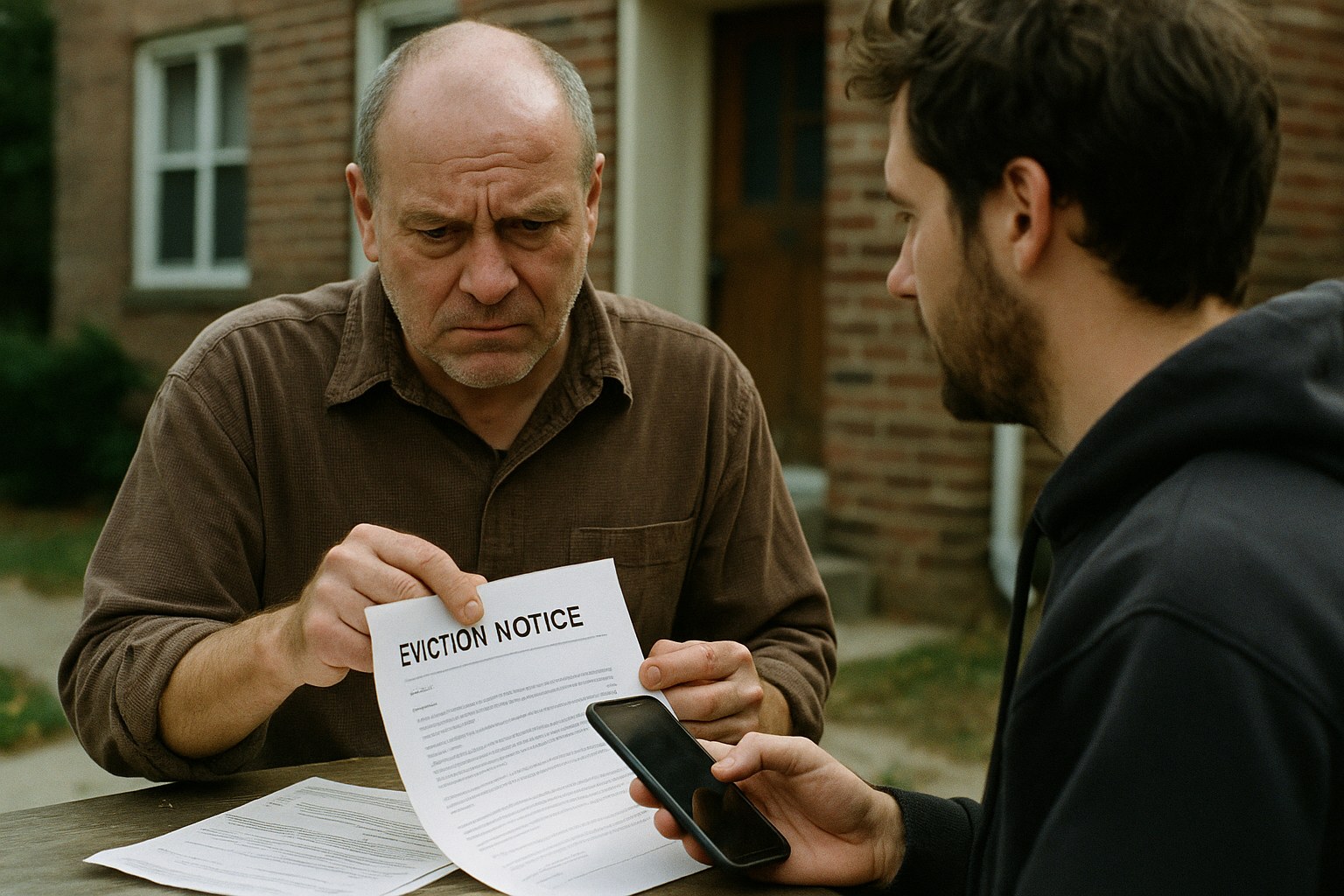
If you rent out property in Florida, whether it is a single condo, a duplex, or a portfolio of units, the outcome of an eviction can turn on a piece of paper you served before the case ever started. Not on whether the tenant paid. Not on whether the lease was broken. On whether the notice you gave matched what the statute required, word for word, day for day, and delivered the way the law says.
That is not a technicality in the dismissive sense. It is how Florida's possession statutes are built, and it is worth understanding before you file.
Why this matters to you in Florida
Florida county courts move eviction cases fast when the paperwork is right. When it is not, the same case can stall for weeks or months while the unit stays occupied and the rent stays unpaid. A tenant's attorney reviewing your file will often look at the notice first, because a defect there can end the case without ever reaching the question of whether the tenant actually breached anything.
The practical consequence is simple. A landlord who is completely right on the facts can still lose the case, pay the tenant's attorney's fees, and have to start the whole process over with a corrected notice. The cost is not just time. Under Florida Statutes § 83.48, the prevailing party in a landlord-tenant action can recover reasonable attorney's fees and costs, which means a dismissal on a notice defect can hand a fee award to the other side.
What Florida law actually requires
Florida's residential landlord-tenant law lives in Chapter 83, Part II of the Florida Statutes. The notice rules sit in § 83.56, and they split by the reason you want to terminate.
Nonpayment of rent. Section 83.56(3) requires a written demand for the rent or possession, giving the tenant at least three days, excluding Saturdays, Sundays, and legal holidays, to pay or move out. The statute includes a sample form. The three-day count is where landlords get tripped up most often, because weekends and holidays do not count and the day of service does not count.
Curable lease violations. For a violation the tenant can fix, such as an unauthorized pet or an unapproved occupant, § 83.56(2)(b) calls for a written notice giving the tenant seven days to correct the problem, with the notice stating that the lease will terminate if the same conduct recurs within twelve months.
Serious, non-curable violations. For conduct like intentional destruction of the premises or repeated violations of the same nature, § 83.56(2)(a) allows a seven-day notice of termination without any opportunity to cure.
End of a term or holdover. A tenant who stays past the end of the rental agreement is addressed by § 83.58, and terminating a month-to-month or other periodic tenancy carries its own notice periods under § 83.57.
Delivery matters too. Section 83.56(4) permits mailing, hand delivery, or, if the tenant is absent, leaving a copy at the residence. Each method has its own timing consequences.
Once termination is proper, § 83.59 governs the action for possession in county court, including what the complaint must allege and what the tenant must do to contest it.
The waiver trap
One rule catches careful landlords more than any other. Section 83.56(5) provides that if a landlord accepts rent with actual knowledge of a noncompliance, or accepts rent after filing an eviction, that can waive the right to terminate for that particular violation.
This bites in ordinary situations. An automatic payment portal accepts a partial payment while your notice is running. A property manager deposits a check without checking the file. A tenant pays half the rent on day two of a three-day notice and you deposit it. Whether any of these actually waives your claim depends on the facts, but each one gives a tenant's lawyer something to argue, and it is the kind of thing worth pausing over before the deposit clears rather than after.
The mixed-theory problem
Not every possession dispute is a Chapter 83 residential eviction. Commercial tenancies fall under Chapter 83, Part I with different rules. Someone occupying property without ever having a landlord-tenant relationship, a guest who will not leave, a former owner after a sale, is generally handled through unlawful detainer under Chapter 82, not eviction. Ejectment applies where the occupant claims an ownership interest.
These are different causes of action with different notice requirements, different filing rules, and different courts in some cases. Filing an eviction against someone who is not a tenant, or an unlawful detainer against someone who is, is a structural problem that a corrected notice cannot always fix. Picking the wrong vehicle at the outset can cost more time than any single notice defect.
What to do before you file
If you are preparing to remove a tenant in Florida, a few things are worth confirming while you still have the chance to correct them:
- Read the lease alongside the statute. A lease cannot shorten or waive the statutory notice periods in Chapter 83, but it can add requirements you still have to meet.
- Recount the days. Exclude the day of service, weekends, and legal holidays where the statute says to.
- Check the amount. A three-day notice demanding late fees, damages, or other charges bundled in as "rent" is a common source of disputes about whether the demand was accurate.
- Confirm who your occupant is. Tenant, holdover, guest, or former owner. That answer determines which chapter applies.
- Freeze rent acceptance. Talk to counsel before depositing anything once you have served a notice or filed.
- Document delivery. Keep proof of how and when the notice was served.
Getting the notice right the first time is far cheaper than fixing it after a dismissal.
A note on the other side of this
Florida's notice rules exist because losing your home is a serious event, and the Legislature built in specific steps and cure periods so that tenants get a real chance to fix a problem before they lose possession. Those protections are not obstacles to work around. They are the price of a process that, when followed correctly, moves quickly. If you are a tenant who received a notice, those same statutes describe rights you have, including cure periods and defenses under § 83.60.
This article provides general information about Florida landlord-tenant law and is not legal advice. It does not create an attorney-client relationship. Statutes change, and how any provision applies depends on the specific lease, notice, and facts involved. Consult a licensed Florida attorney about your particular situation before taking action.
If you are dealing with a Florida landlord-tenant dispute and want someone to review your notice, your lease, and your options before you act, Louis Law Group offers consultations. You can reach the firm to discuss what Chapter 83 requires in your circumstances.
Sources
- Florida Statutes Chapter 83, Part II, Residential Tenancies
- Florida Statutes § 83.56, Termination of rental agreement
- Florida Statutes § 83.57, Termination of tenancy without specific term
- Florida Statutes § 83.58, Remedies, tenant holding over
- Florida Statutes § 83.59, Right of action for possession
- Florida Statutes § 83.48, Attorney's fees
- Florida Statutes Chapter 82, Forcible Entry and Unlawful Detainer
Is your insurance company handling your claim fairly?
Answer 5 questions. We'll analyze your claim against Florida property insurance law and show you exactly where you stand.
General information only, not legal advice. Based on Florida insurance law and claim best practices.
Get Your Free Property Damage Checklist
24-step claim guide — protect your rights after damage to your home
Free. No spam. Unsubscribe anytime.
Sources & References
Find Out If You Qualify — Free Case Review
No fees unless we win · 100% confidential · Same-day response
★★★★★ 4.7 · 67 Google Reviews
What Our Clients Say
Real reviews from real clients who fought their insurance companies — and won.
"Citizens denied our roof leak claim, but this firm fought for us and got money for our repairs. We even had funds left over after fixing the roof."
"Pierre and his team are amazing. They truly cater to their clients and help you get the most from your insurance company."
"When my insurance company denied my roof damage claim, Louis Law Group stepped in and fought for me. I'm extremely satisfied with the results they obtained."
"They accomplished exactly what they set out to do and helped me finally receive my insurance check."
"Louis Law Group handled our homeowners insurance dispute and got results much faster than we expected. Excellent service and great communication."
"Very professional attorneys with outstanding attention to detail. They will not stop fighting for their clients."
* Reviews from Google. Results may vary by case.
How it Works
No Win, No Fee
We like to simplify our intake process. From submitting your claim to finalizing your case, our streamlined approach ensures a hassle-free experience. Our legal team is dedicated to making this process as efficient and straightforward as possible.
You can expect transparent communication, prompt updates, and a commitment to achieving the best possible outcome for your case.
Free Case EvaluationLet's get in touch
We like to simplify our intake process. From submitting your claim to finalizing your case, our streamlined approach ensures a hassle-free experience. Our legal team is dedicated to making this process as efficient and straightforward as possible.
12 S.E. 7th Street, Suite 805, Fort Lauderdale, FL 33301