
Insurers Are Racing to Build AI Armies. What That Means for Florida Policyholders.
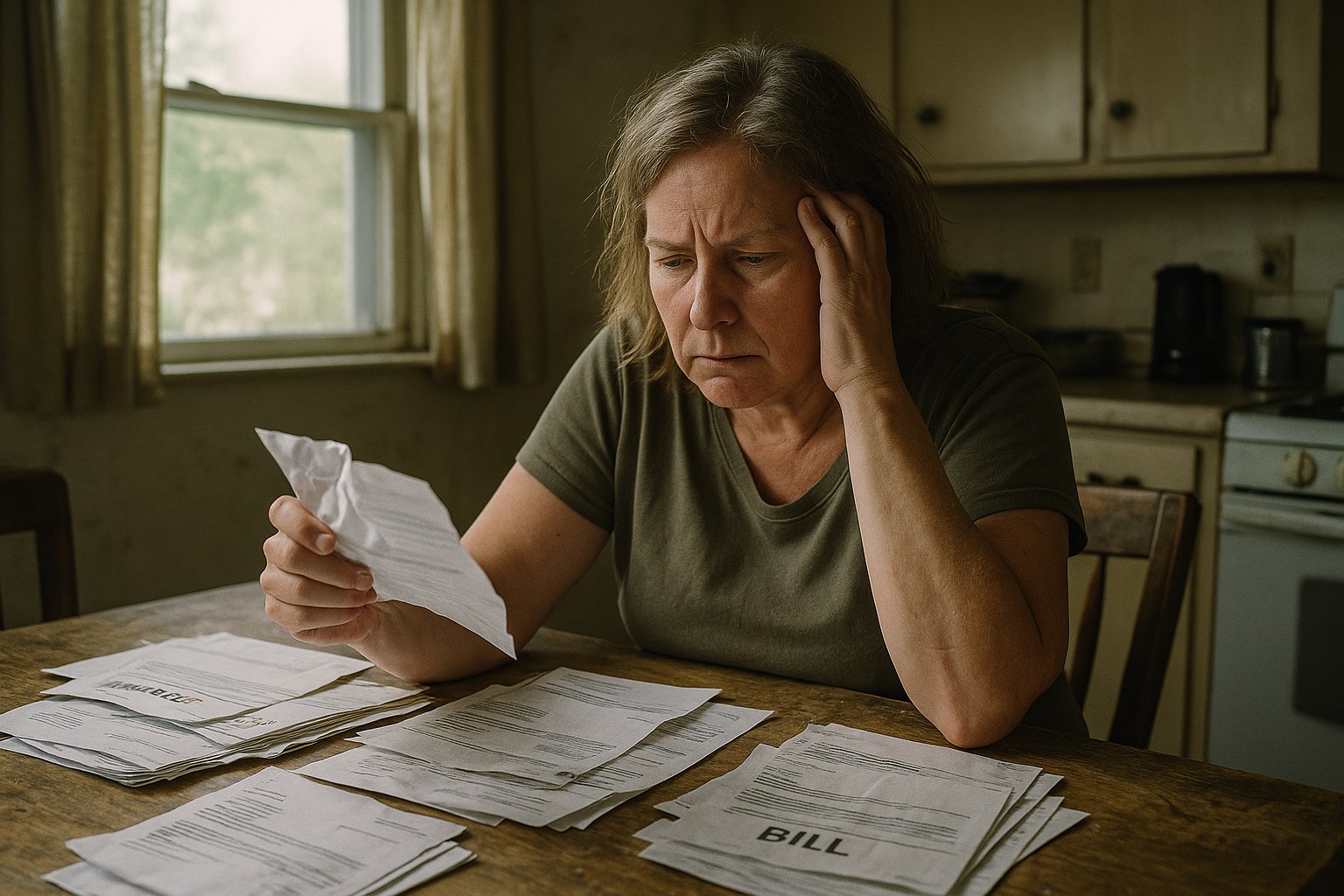
You file a claim after a hurricane, a car wreck, or a denied medical treatment, and the answer that comes back reads like nobody in particular wrote it. No

7/13/2026 | 1 min read
See If You Have a Strong Insurance Claim
Take our 2-minute qualifier and find out if you're a strong candidate for representation — at no cost.
See If You Qualify — Free Eligibility Check →No fees unless we win · Takes under 2 minutes · No obligation
Insurers Are Racing to Build AI Armies. What That Means for Florida Policyholders.
You file a claim after a hurricane, a car wreck, or a denied medical treatment, and the answer that comes back reads like nobody in particular wrote it. No adjuster's judgment, no reference to the specifics of your loss, just a number. If that has happened to you in Florida, a new industry ranking on insurer AI investment is worth your attention.
Why this matters to you in Florida
Florida policyholders deal with more claim volume, more storm losses, and more disputes than almost anyone in the country. That makes the question of who, or what, is deciding your claim more than academic here. A public scoreboard now shows the largest insurers and reinsurers competing openly on how much automated decision-making capacity they can build. It does not tell you that a machine denied your claim. It does tell you the industry is investing heavily in tools that touch how claims get processed, and that you should not assume a human carefully read your file just because the letter has a signature on it.
What the report actually says
A London-based benchmarking firm called Evident published its second annual ranking of AI "maturity" among 30 of the world's largest insurance and reinsurance companies. According to the findings, one out of every 50 employees across those carriers is now classified as an AI specialist, and AI-specialist roles across the group grew 32% over the past year even as overall employment at those companies declined slightly, Insurance Journal reports.
Evident ranked Allianz as this year's top overall AI maturity leader, unseating AXA. Allianz also leads the "Talent" pillar, which carries the most weight in Evident's index at 45% of the total score, with 28% more AI professionals on staff than AXA, per the report cited by Insurance Journal. Chubb moved from eighth to third in talent rankings year over year. USAA, last year's talent leader, slipped to fourth after ranking near the bottom on "talent development" while still leading on raw talent capability, according to the same reporting. The report also found that 11 of the 30 insurers studied now have a Chief AI Officer or equivalent, and two-thirds of those executives have held the job less than a year, Insurance Journal notes.
One important limit: Evident measures talent and organizational maturity, not deployment. The report does not say which parts of the claims process any carrier has automated, and it does not describe how any named company handles Florida claims.
What the ranking does not answer
The report raises a question it does not resolve: this capacity is being built to do what, and for whose benefit?
Insurers could be aiming AI at faster payouts and clearer communication. They could also be aiming it at cost control and loss ratios, the internal measure that shapes shareholder returns. The report does not measure intent, and neither can we. What is on the record is that AI-specialist hiring grew while overall headcount at those same carriers slipped slightly, and that at least one chief executive was described in Evident's report as focused on "converting" AI investment into results, according to Insurance Journal's coverage.
Nothing in this ranking establishes that any of the 30 companies studied mishandles claims. It is fair, though, for a policyholder to notice that speed and consistency at scale are not the same thing as fairness to one person standing in front of a wrecked roof or an unpaid medical bill, and that this ranking does not measure the industry on that second thing at all.
Your rights as a Florida policyholder do not change
Here is the part that matters most: whatever tools an insurer uses internally, Florida law still governs how your claim must be handled. Automation is not a defense to a wrongful denial, and an algorithm is not a party to your policy. Your insurance contract and Florida's claims-handling statutes apply the same way regardless of what generated the letter.
Under Florida's Homeowner Claims Bill of Rights, codified at Fla. Stat. 627.7142, residential property policyholders are entitled to receive acknowledgment of a claim, notice of decisions on coverage, and payment or denial within the timeframes set by statute. Florida's general claim settlement standards appear at Fla. Stat. 626.9541(1)(i), which addresses unfair claim settlement practices, including failing to promptly investigate claims and failing to give a reasonable explanation for a denial or compromise offer.
Practical steps that apply no matter how a decision was reached:
- Ask for the basis in writing. Request a written explanation of any denial or reduced payment, plus the estimates, engineering reports, or documentation the insurer relied on.
- Look at your appraisal clause. Many Florida property policies include an appraisal process, a contractual route for resolving disputes about the amount of a loss without immediately filing suit.
- Keep your own record. Save photos, communications, repair estimates, and every letter. Do not rely on the insurer's file being complete.
- Do not treat a first offer as final. A number arriving quickly is not the same as a number arriving correctly.
- Watch the deadlines. Florida imposes statutes of limitations and, for certain property claims, specific notice-of-claim windows. Waiting can close off options that were available earlier. The Florida Department of Financial Services also maintains a consumer complaint process if you believe a carrier is not following the rules.
Depending on the facts, some policyholders may have grounds to explore a bad faith claim against an insurer that failed to handle a claim properly. Those cases turn heavily on specific conduct, notice, and timing, which is why an individual review matters more than any general article.
The bottom line
An industry-published ranking of AI investment is not evidence that your claim was decided by a machine, and it should not be read that way. What it is, is a reminder that the sophistication gap between a large carrier and an individual policyholder is widening, and that the rules protecting you were written for humans on both sides of the file. If a decision on your claim felt rushed, generic, or disconnected from what actually happened to your property, the right response is not to accept it as the output of a system too complex to question. It is to ask for the reasoning and to get your own review.
This article is general information about a public industry report and does not constitute legal advice. It does not evaluate the facts of any individual claim. Insurance policies, claim histories, and applicable law vary, and nothing here should be relied on as a substitute for individual legal counsel.
If you believe your Florida property or injury claim was denied, delayed, or underpaid, and you are not getting a straight answer about why, Louis Law Group offers consultations to review your specific policy and circumstances and discuss what options may be available to you. Every claim is different, and the only way to know what applies to yours is to have someone look at it.
Sources
Is your insurance company handling your claim fairly?
Answer 5 questions. We'll analyze your claim against Florida property insurance law and show you exactly where you stand.
General information only, not legal advice. Based on Florida insurance law and claim best practices.
Get Your Free Property Damage Checklist
24-step claim guide — protect your rights after damage to your home
Free. No spam. Unsubscribe anytime.
Find Out If You Qualify — Free Case Review
No fees unless we win · 100% confidential · Same-day response
★★★★★ 4.7 · 67 Google Reviews
What Our Clients Say
Real reviews from real clients who fought their insurance companies — and won.
"Citizens denied our roof leak claim, but this firm fought for us and got money for our repairs. We even had funds left over after fixing the roof."
"Pierre and his team are amazing. They truly cater to their clients and help you get the most from your insurance company."
"When my insurance company denied my roof damage claim, Louis Law Group stepped in and fought for me. I'm extremely satisfied with the results they obtained."
"They accomplished exactly what they set out to do and helped me finally receive my insurance check."
"Louis Law Group handled our homeowners insurance dispute and got results much faster than we expected. Excellent service and great communication."
"Very professional attorneys with outstanding attention to detail. They will not stop fighting for their clients."
* Reviews from Google. Results may vary by case.
How it Works
No Win, No Fee
We like to simplify our intake process. From submitting your claim to finalizing your case, our streamlined approach ensures a hassle-free experience. Our legal team is dedicated to making this process as efficient and straightforward as possible.
You can expect transparent communication, prompt updates, and a commitment to achieving the best possible outcome for your case.
Free Case EvaluationLet's get in touch
We like to simplify our intake process. From submitting your claim to finalizing your case, our streamlined approach ensures a hassle-free experience. Our legal team is dedicated to making this process as efficient and straightforward as possible.
12 S.E. 7th Street, Suite 805, Fort Lauderdale, FL 33301