
Assurant Home Solutions of Florida Warranty Claim Denied in Florida? Your Legal Rights
Assurant Home Solutions of Florida warranty claim denied in Florida? Know your rights under Florida law and how a dispute attorney can help. See if you qualify — free, no obligation.

7/12/2026 | 1 min read
Warranty Claim Denied? See If You Qualify
Take our 2-minute qualifier and find out if your denied warranty or service-contract claim qualifies for representation — at no cost.
See If You Qualify — Free Eligibility Check →No fees unless we win · Takes under 2 minutes · No obligation
If Assurant Home Solutions of Florida denied your claim, you can dispute it. Request the denial in writing, pull your service agreement, compare the stated reason to the exact exclusion cited, gather photos, invoices, and technician notes, then appeal in writing. Florida law also gives you arbitration and, because that arbitration is non-binding, a path to court.
A denial letter is not the end of the process. It is the company's position, written by the company, based on its own reading of a contract you did not draft. Florida regulates these home service agreements under the Service Warranty Association Act, Fla. Stat. ch. 634, Part III, and that regulation exists precisely because the person holding the contract and the company interpreting it do not start on equal footing. What follows is how to close that gap.
Why do home warranty companies deny claims that look covered?
Most denials are not about whether your system broke. They are about how the company classifies the reason it broke. A service contract pays for mechanical failure from normal use. It typically does not pay for rust, corrosion, sediment, improper installation, code upgrades, lack of maintenance, or a condition that existed before coverage started. So the adjuster or the assigned technician is looking for a cause that fits one of those buckets, because a cause in one of those buckets ends the claim without a payment.
That creates predictable pressure points. A compressor that failed after years of Florida humidity gets labeled corrosion. A water heater that leaked gets labeled sediment buildup. A twelve-year-old air handler gets labeled a pre-existing condition, even though the contract was sold to you knowing the equipment's age. A repair that needs a permit gets labeled a code upgrade, which many agreements exclude. None of these labels is automatically wrong. The problem is that the label is often applied fast, by a contractor working a flat-rate dispatch, with no lab analysis and no written engineering support behind it.
The second driver is dollar caps. Even when coverage is accepted, per-item limits, aggregate annual limits, and non-covered charges such as refrigerant, permits, disposal, crane fees, and modifications can reduce a $9,000 replacement to a check that does not come close to making you whole. An underpayment is a dispute in the same way a flat denial is a dispute, and it deserves the same scrutiny.
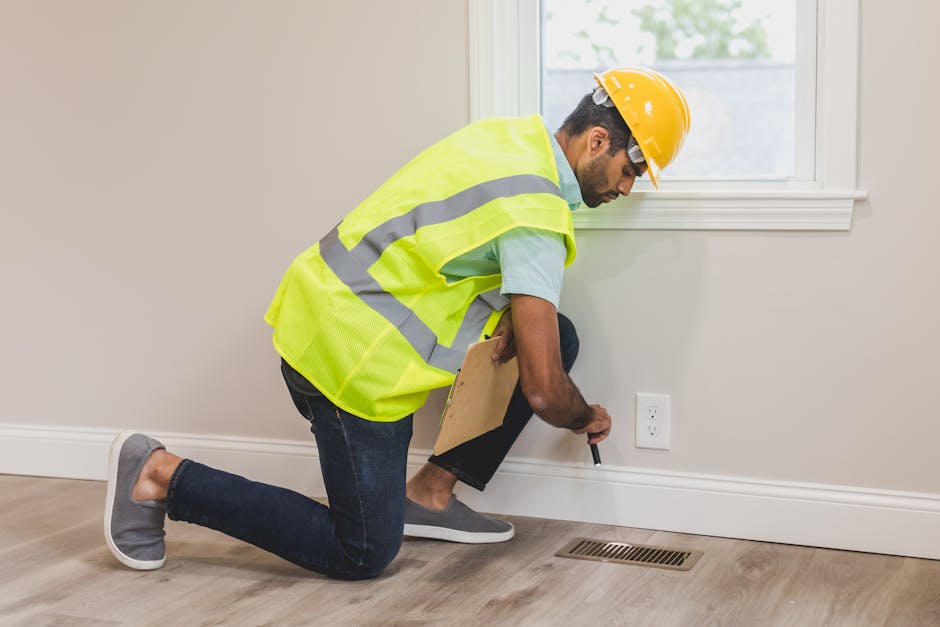
What does my Assurant Home Solutions of Florida denial letter actually mean?
Your denial letter is a legal position, and it has to commit to a reason. Read it for three things: the exact contract language it relies on, the factual finding it rests on, and what it does not say. Those three items define the entire rest of your dispute.
Denials generally fall into a small number of categories, and each one fails or holds for a different reason:
| Stated reason | What the company is really asserting | Where it commonly breaks down |
|---|---|---|
| Pre-existing condition | The failure began before your coverage started | No inspection was done at enrollment, and no evidence dates the failure |
| Lack of maintenance | You failed to service the unit | You have service records, or the part that failed is unrelated to maintenance |
| Rust, corrosion, or sediment | An excluded cause, not mechanical failure | Conclusion asserted by a dispatch technician with no testing or teardown |
| Improper installation | A third party installed it wrong years ago | The company accepted premiums on that same equipment without objection |
| Not a covered component | The failed part sits outside the covered system | The covered-components list, read literally, includes it |
| Cap reached or non-covered charges | Coverage exists but payment is limited | Charges were miscategorized, or the cap was applied to the wrong item |
Also note what the letter omits. If it never cites a specific section of your agreement, that is significant. If it never explains how the technician reached a cause-of-failure conclusion, that is significant too. A denial that cannot point to language and evidence is a denial you can push back on with a written request that it do exactly that.
How do I read my contract against the stated denial reason?
Put the denial letter and your service agreement side by side and treat it as a matching exercise. The question is narrow: does the specific sentence the company quoted actually cover the specific facts of your failure?
Work through it in this order. First, confirm the item is on the covered-components list, because those lists are itemized and companies sometimes deny a part that is plainly listed. Second, read the exclusion word by word. Exclusions are written narrowly, and a company often stretches a clause about one thing to cover something adjacent. Third, check the definitions section, since terms like "mechanical failure," "pre-existing," and "normal wear and tear" are usually defined in the contract itself and the definition may be far friendlier to you than the denial assumes. Fourth, look at your obligations, including any waiting period, maintenance requirement, or notice deadline, and confirm you met them.
Then look at the money terms even if coverage is not disputed: the per-item cap, the aggregate cap, the deductible or service fee, and the list of charges the company will not pay. Underpayment disputes almost always live in that paragraph.
Two outside sources of law matter here. Under the federal Magnuson-Moss Warranty Act, 15 U.S.C. 2301 and following, written warranty terms carry obligations that a company cannot simply reinterpret after a claim comes in. And under the Florida Deceptive and Unfair Trade Practices Act, Fla. Stat. section 501.204, unfair or deceptive practices in trade or commerce are unlawful, which can be relevant when what was sold to you and what was honored do not match. A review of your denial against your specific contract is what tells you whether either has any bearing on your situation.

What should I document before I respond to the denial?
Build the file before you argue, because the evidence you can produce in the first thirty days is usually stronger than what you can reconstruct six months later. Above all, do not let the failed equipment be hauled away. Once the unit is gone, the company's cause-of-failure opinion becomes very difficult to test.
- The full contract, including the declarations page, the covered-components list, every exclusion, all endorsements, and any renewal terms.
- The written denial and every version of it, plus any email or portal message explaining it.
- The technician's report, including diagnostic notes, model and serial numbers, and photographs. Request the full report in writing if you only received a summary.
- Your own photographs and video of the failed unit, its data plate, the installation area, and any resulting damage.
- Maintenance and service history, since this defeats a lack-of-maintenance denial faster than any argument.
- An independent contractor's written opinion on cause of failure, dated and signed, from someone with no relationship to the warranty company.
- Repair estimates and invoices showing what the covered repair actually costs, which is how you quantify an underpayment.
- A communication log: every call date, who you spoke with, what was said, and every claim or reference number.
Then move the conversation to writing. Ask, in writing, for the specific contract provision relied on and the evidence supporting the cause of failure. A written record of what the company said and when it said it is the backbone of a later dispute.
What are my options after a denial in Florida?
You have a sequence of escalating options, and the last one is more open than most policyholders realize. Start with an internal written appeal that attaches your evidence and addresses the exact exclusion cited. Many disputes resolve here, because the company is now responding to documentation instead of a phone call.
If the appeal fails, home service agreements sold in Florida are regulated under Fla. Stat. ch. 634, Part III, and the Florida Department of Financial Services accepts consumer complaints about companies operating under that chapter. Filing creates an independent record and requires a response.
Your agreement likely contains an arbitration clause, and this is where Florida homeowners have a meaningful advantage. The Florida-approved version of this contract makes arbitration non-binding. That means an arbitration outcome you disagree with does not close the door. A policyholder who disputes the arbitration result can still take the claim to a Florida court. Anyone who tells you an arbitration clause permanently forecloses your right to a courtroom is describing a different contract than the one Florida approved.
Court remains available for breach of contract, and depending on the facts, claims may also involve the Magnuson-Moss Warranty Act or the Florida Deceptive and Unfair Trade Practices Act. Whether any of that fits your situation depends entirely on your contract language, your denial reason, and your evidence. That is what a review determines.
Frequently asked questions
Can I still go to court if my warranty contract has an arbitration clause?
Often yes. The Florida-approved version of this contract makes arbitration non-binding, which means a policyholder who disagrees with the arbitration outcome may still bring the claim to a Florida court. Read your own arbitration provision closely and confirm which version applies to your agreement before assuming arbitration is your only forum.
What if the company approved the repair but paid far less than it costs?
An underpayment is a dispute, not a resolution. Compare the payment against your contract's per-item cap, aggregate cap, and list of non-covered charges such as permits, refrigerant, disposal, or modifications. Then obtain a written estimate from an independent contractor showing the true cost of the covered repair. The gap between those two numbers is your claim.
Does a pre-existing condition denial hold up if nobody inspected my home?
It depends on the evidence behind it. A company asserting that a failure predates your coverage generally needs a factual basis for that conclusion. If no inspection occurred at enrollment, no testing was done, and the finding rests on a technician's visual impression, ask in writing for the evidence supporting it and preserve the equipment so an independent opinion is still possible.
How long do I have to challenge a Florida warranty denial?
Deadlines vary. Your contract may impose its own notice or appeal timelines, and separate statutory limitation periods can apply to a lawsuit. Because those clocks run on different schedules and can start at different events, treat the denial date as the start of a limited window and have your contract reviewed promptly rather than waiting for the appeal process to run its course.
Should I pay for the repair myself while the dispute is pending?
Sometimes you have no practical choice, especially with air conditioning or water heating in Florida. If you must repair before the dispute resolves, document everything first: photograph the failed unit and its data plate, keep the removed parts if possible, obtain a written cause-of-failure opinion, and retain every invoice. Those records preserve your ability to seek reimbursement later.
Getting your denial reviewed
The single most useful step after a denial is a careful read of the actual contract language against the actual stated reason, supported by evidence you gathered while the failed equipment was still available. That review is what separates a denial that holds from one that does not, and it is specific to your paperwork rather than to warranty disputes in general.
If your Assurant Home Solutions of Florida claim was denied or underpaid, you can have the denial and the contract reviewed to understand what options may be available to you.
Legal Disclaimer
This page is general information, not legal advice, and does not create an attorney-client relationship. Florida law changes and every warranty dispute depends on its own facts and the specific contract language. For advice on your situation, See If You Qualify → — free, no obligation.
Find Out If You Qualify — Free Case Review
No fees unless we win · 100% confidential · Same-day response
★★★★★ 4.7 · 67 Google Reviews
What Our Clients Say
Real reviews from real clients who fought their insurance companies — and won.
"Citizens denied our roof leak claim, but this firm fought for us and got money for our repairs. We even had funds left over after fixing the roof."
"Pierre and his team are amazing. They truly cater to their clients and help you get the most from your insurance company."
"When my insurance company denied my roof damage claim, Louis Law Group stepped in and fought for me. I'm extremely satisfied with the results they obtained."
"They accomplished exactly what they set out to do and helped me finally receive my insurance check."
"Louis Law Group handled our homeowners insurance dispute and got results much faster than we expected. Excellent service and great communication."
"Very professional attorneys with outstanding attention to detail. They will not stop fighting for their clients."
* Reviews from Google. Results may vary by case.
How it Works
No Win, No Fee
We like to simplify our intake process. From submitting your claim to finalizing your case, our streamlined approach ensures a hassle-free experience. Our legal team is dedicated to making this process as efficient and straightforward as possible.
You can expect transparent communication, prompt updates, and a commitment to achieving the best possible outcome for your case.
Free Case EvaluationLet's get in touch
We like to simplify our intake process. From submitting your claim to finalizing your case, our streamlined approach ensures a hassle-free experience. Our legal team is dedicated to making this process as efficient and straightforward as possible.
12 S.E. 7th Street, Suite 805, Fort Lauderdale, FL 33301