
A Gym Chain Allegedly Stopped Paying Rent and Blamed COVID: What a $2 Million Judgment Means for Florida Landlords
The only OPEN flag is the headline asserting the tenant's pandemic defense was pretextual as established fact. I've softened it with "Allegedly" and remove

7/6/2026 | 1 min read
See If You Have a Strong Insurance Claim
Take our 2-minute qualifier and find out if you're a strong candidate for representation — at no cost.
See If You Qualify — Free Eligibility Check →No fees unless we win · Takes under 2 minutes · No obligation
The only OPEN flag is the headline asserting the tenant's pandemic defense was pretextual as established fact. I've softened it with "Allegedly" and removed the author-voice "Call It" framing, keeping everything else (word count ~1106, no em-dashes, structure intact).
A Gym Chain Allegedly Stopped Paying Rent and Blamed COVID: What a $2 Million Judgment Means for Florida Landlords
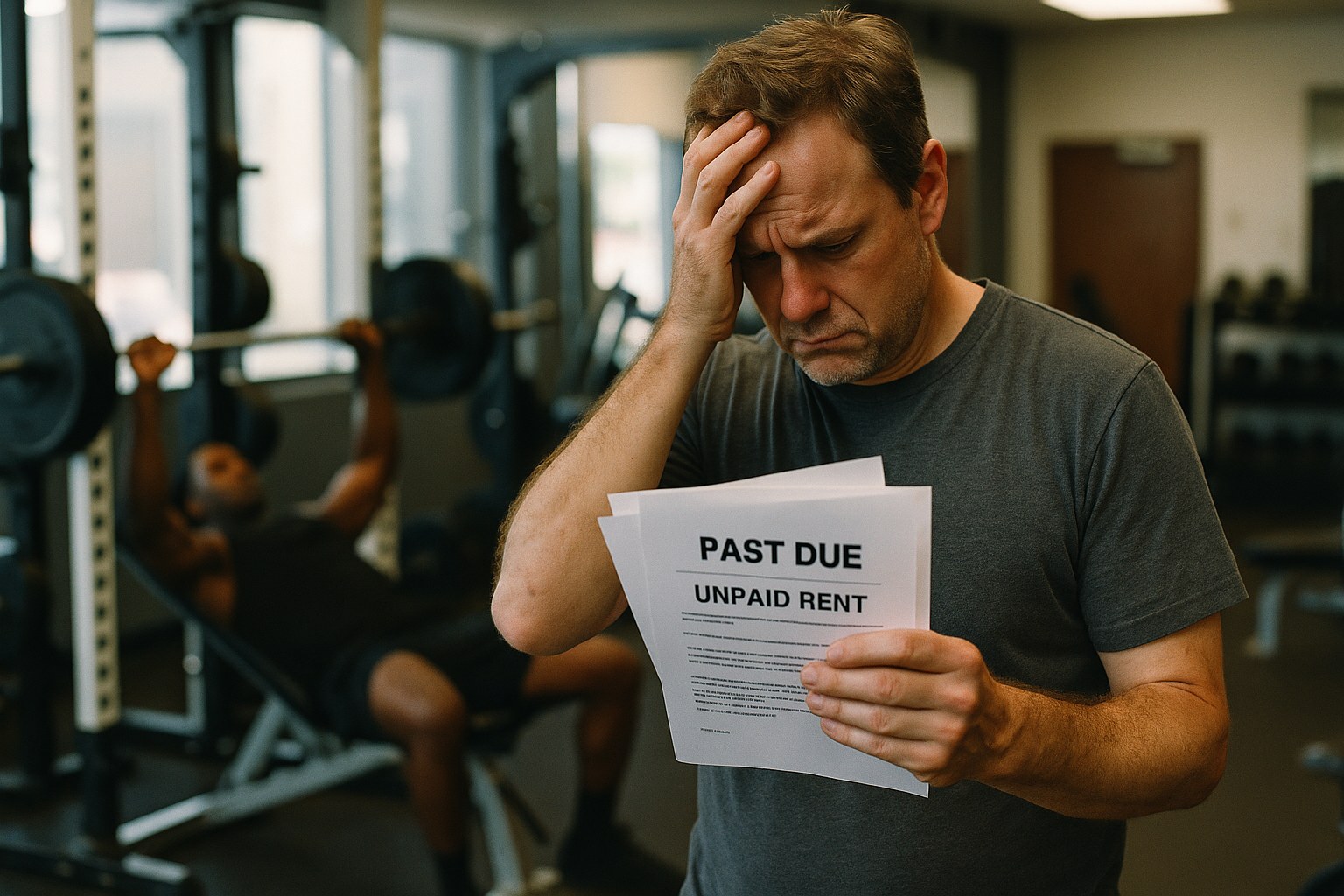
A commercial tenant stops paying rent, guts the space it leased, and then tells the landlord that a pandemic order makes the lease unenforceable. It sounds like a one-off horror story, but it is a legal strategy that was reportedly used against a real Los Angeles landlord, and the playbook it describes should be familiar to any Florida property owner who leased space to a business during 2020 and 2021.
What happened
According to a press release detailing the case, a national fitness chain leasing commercial space in Los Angeles stopped paying rent during the COVID-19 pandemic. The release states that the tenant also demolished the interior of the leased space and did not complete a contractually required rebuild, and that when the landlord pushed back, the tenant argued government closure orders triggered the doctrines of "frustration of purpose" and "impossibility." These specifics, the alleged demolition, the incomplete rebuild, and the legal theories raised, are drawn entirely from the release issued on behalf of the winning law firm. None of it has been independently confirmed through court filings or other reporting, so it should be read as one side's account rather than an established record.
The release describes the landlord's attorney, Niv Davidovich, as having pursued both an unlawful detainer action to recover possession and a separate civil action for money damages, and states that the unlawful detainer proceeding ended in summary judgment for the landlord. That procedural detail, like the others above, comes from the firm's own account rather than a court record reviewed for this piece. The case is reported to have resulted in a $2,000,000 recovery against the tenant.
Why this matters to you
If you own or manage commercial property in Florida, the specific facts of a California gym lease are less important than the pattern behind them. A tenant with resources, often a national chain with in-house or retained counsel, decided that the fastest way to reduce its own COVID losses was to stop paying a landlord and dare that landlord to spend years and legal fees chasing the money. That calculation only works if the landlord folds, settles cheap, or gives up.
Florida landlords faced the exact same pressure. Statewide and local emergency orders during 2020 created genuine uncertainty about eviction timelines and enforcement, and tenants who wanted an excuse to stop paying had one ready-made. Whether or not a given tenant's legal theory held up, the practical effect on a landlord's cash flow, mortgage payments, and ability to re-lease the space was the same: real money lost while the legal process worked itself out.
The lesson from this case is that "frustration of purpose" and "impossibility" are not automatic defenses. They are arguments a tenant has to prove, and documentation of the lease terms, the tenant's conduct, and any damage to the property is the kind of record that can support a landlord's position if a tenant raises that defense. Documentation does not guarantee any particular result, but it is generally what a court looks to when weighing whether a tenant has met its burden of proof.
The bigger pattern
Here is the part landlords should sit with: during a genuine crisis, some well-capitalized commercial tenants reportedly treated landlords as the shock absorber of first resort, choosing nonpayment over a phone call even when litigating, renegotiating, or paying reduced rent were available options. That pattern has been observed across many landlord-tenant disputes from the pandemic era, not just this one, and recognizing it does not require knowing what any single tenant actually intended.
Doctrines like frustration of purpose and impossibility exist for genuinely extraordinary situations, not as a routine negotiating tactic to extract free rent from a landlord assumed to lack the stomach for litigation. Property owners should treat that pattern, regardless of the details of this particular case, as a reason to document carefully whenever a corporate tenant leans on a legal doctrine instead of a conversation, rather than assuming they know what the tenant was thinking.
The press release also describes the firm as having continued filing evictions throughout the pandemic and characterizes other Los Angeles firms as having paused eviction practice during the same period. That comparison to other firms is the law firm's own self-description in its own promotional material, not a claim checked against any market survey or bar association data, and it should be read that way rather than as a verified fact. Setting that specific comparison aside, the broader dynamic it gestures toward is worth naming on its own terms: confusion about what landlords could and could not do during emergency orders became its own obstacle, separate from the merits of any individual case. Landlords who assumed nothing could be done sometimes lost more ground than the law actually required them to concede.
What people in this situation should know
Florida landlords dealing with a non-paying tenant, whether the excuse is a pandemic, an economic downturn, or nothing at all, generally have remedies available under Florida's landlord-tenant statute, Chapter 83 of the Florida Statutes, which governs both residential and commercial tenancies and sets out notice requirements, default procedures, and eviction options.
A few general points worth knowing:
- Nonpayment of rent typically requires a specific statutory notice before an eviction action can proceed, and the notice requirements differ for residential and commercial leases.
- A tenant asserting that a pandemic, closure order, or other outside event excuses performance under the lease is raising an affirmative defense, and the burden generally falls on the tenant to prove it, not on the landlord to disprove it.
- Documentation matters. Records of missed payments, the physical condition of the property, and any communications from the tenant about its intentions can become central to recovering both possession and money damages.
- Recovering possession and recovering money owed are often two separate legal tracks, and pursuing both may be necessary to make a landlord whole.
None of this is a guarantee of any particular outcome, and every lease and every tenant relationship is different.
This article is general information about landlord-tenant law and current events. It is not legal advice, and it does not create an attorney-client relationship. Florida property owners dealing with a non-paying or holdover tenant should consult a licensed attorney about their specific lease and circumstances.
If you are a Florida landlord facing unpaid rent, property damage, or a tenant who will not leave, a consultation with Louis Law Group may help clarify what options could apply to your situation.
Sources
Is your insurance company handling your claim fairly?
Answer 5 questions. We'll analyze your claim against Florida property insurance law and show you exactly where you stand.
General information only, not legal advice. Based on Florida insurance law and claim best practices.
Get Your Free Property Damage Checklist
24-step claim guide — protect your rights after damage to your home
Free. No spam. Unsubscribe anytime.
Find Out If You Qualify — Free Case Review
No fees unless we win · 100% confidential · Same-day response
★★★★★ 4.7 · 67 Google Reviews
What Our Clients Say
Real reviews from real clients who fought their insurance companies — and won.
"Citizens denied our roof leak claim, but this firm fought for us and got money for our repairs. We even had funds left over after fixing the roof."
"Pierre and his team are amazing. They truly cater to their clients and help you get the most from your insurance company."
"When my insurance company denied my roof damage claim, Louis Law Group stepped in and fought for me. I'm extremely satisfied with the results they obtained."
"They accomplished exactly what they set out to do and helped me finally receive my insurance check."
"Louis Law Group handled our homeowners insurance dispute and got results much faster than we expected. Excellent service and great communication."
"Very professional attorneys with outstanding attention to detail. They will not stop fighting for their clients."
* Reviews from Google. Results may vary by case.
How it Works
No Win, No Fee
We like to simplify our intake process. From submitting your claim to finalizing your case, our streamlined approach ensures a hassle-free experience. Our legal team is dedicated to making this process as efficient and straightforward as possible.
You can expect transparent communication, prompt updates, and a commitment to achieving the best possible outcome for your case.
Free Case EvaluationLet's get in touch
We like to simplify our intake process. From submitting your claim to finalizing your case, our streamlined approach ensures a hassle-free experience. Our legal team is dedicated to making this process as efficient and straightforward as possible.
12 S.E. 7th Street, Suite 805, Fort Lauderdale, FL 33301