
When a Gym Chain Stops Paying Rent: What a Reported $2 Million COVID-Era Recovery Means for Florida
If you own or manage commercial property in Florida, you have probably lived some version of this: a tenant closes, stops paying, and points at the pandemi

7/4/2026 | 1 min read
See If You Have a Strong Insurance Claim
Take our 2-minute qualifier and find out if you're a strong candidate for representation — at no cost.
See If You Qualify — Free Eligibility Check →No fees unless we win · Takes under 2 minutes · No obligation
When a Gym Chain Stops Paying Rent: What a Reported $2 Million COVID-Era Recovery Means for Florida
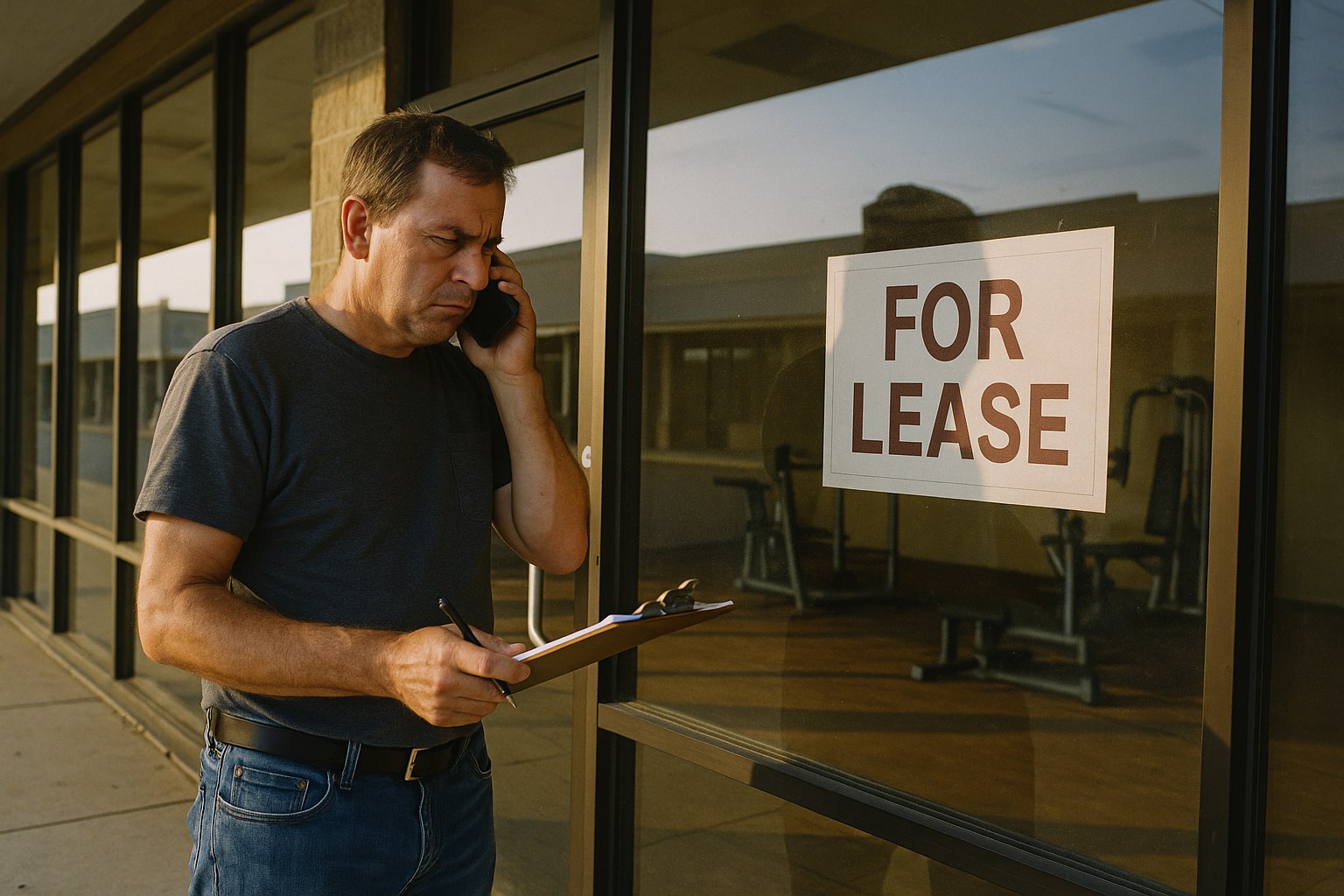
If you own or manage commercial property in Florida, you have probably lived some version of this: a tenant closes, stops paying, and points at the pandemic as the reason the rent obligation simply vanished. Meanwhile your taxes, insurance, and mortgage keep arriving on schedule. A recent report out of Los Angeles puts a number on how one of those standoffs ended, and while the case itself is a California matter, the questions it raises land squarely on Florida landlords who are still cleaning up COVID-era lease defaults.
Why this matters to you in Florida
Florida commercial leases are governed by Chapter 83, Part I of the Florida Statutes, not by whatever a national tenant's legal department asserts in a letter. A tenant citing "COVID" is not the same thing as a tenant with no obligation to pay. Rent, common area maintenance charges, and personal guaranties are contract terms. They do not disappear because a government order temporarily closed a business, or because a chain later decided a location was not worth keeping.
That said, Florida law does impose real procedural requirements on landlords, and missing one can cost you months. The point of this article is not that you win. It is that the outcome depends on the lease language, the notices, and how fast you move, and those are things you can still influence right now.
What was actually reported
A news report distributed through Google News states that a Los Angeles eviction attorney, Niv Davidovich, secured a $2 million recovery from a gym chain in a matter connected to the COVID-19 pandemic.
Here is what that report does not say, and it matters: it does not identify which side of the lease he represented, what the underlying dispute involved, which court heard it, what the lease actually said, or how the $2 million figure was reached. It does not say whether the fight was about unpaid rent, a termination dispute, or something else entirely. So treat the headline as a data point about how large these disputes can get, not as a template for your own case. Nothing in the reporting establishes a legal rule, and a California outcome would not bind a Florida court in any event.
The pattern worth naming
The pandemic handed commercial tenants, especially well-capitalized chains with in-house counsel, a familiar set of arguments. Force majeure. Frustration of purpose. Impossibility. Closure orders excused performance. The legal merits of those arguments varied enormously by lease and by jurisdiction, and courts around the country reached different results depending on the exact contract language.
But there is a second dynamic that has nothing to do with the merits. A tenant with a large legal budget can make litigation expensive enough that a smaller property owner decides collecting is not worth the fight. The owner absorbs the loss. The lease terms never get tested. That is a resource problem, not a legal one, and it is the reason a reported recovery of this size is less a victory lap than a reminder of what it costs to get there: years of litigation, legal fees, and a unit sitting vacant or under market the entire time.
Florida owners should take the underlying lesson rather than the number. Pandemic-era excuses are fading, but the incentive for a tenant to see how long a default can run before consequences arrive has not gone anywhere.
What Florida landlords should understand about their position
If you are dealing with a defaulting commercial tenant in Florida, several things shape what you can realistically recover. None of these guarantee a result, and how they apply depends entirely on your facts:
Notice requirements are strict. Chapter 83 sets out specific notice steps before a landlord can pursue eviction or damages on a commercial lease. Skipping or fumbling a step can restart your clock and hand the tenant delay for free.
Commercial leases carry tools residential leases do not. Personal guaranties, acceleration clauses, security deposits held under specific terms, and negotiated default remedies can materially change what is recoverable and from whom. Read the guaranty carefully. It is often the difference between chasing a shell entity and reaching a solvent party.
Documentation drives everything. Your notices, lease amendments, any correspondence about closures or payment arrangements, and a clean timeline of the default are what a case is built on. Emails where a tenant acknowledges the debt or asks for forbearance can matter more than you would expect.
Delay is not neutral. The longer a defaulted tenant remains in possession, or the longer you wait to act, the more back rent and fees accumulate, and the harder some of it becomes to collect, particularly if the tenant's finances deteriorate in the meantime.
Litigation against a resourced tenant takes time. That is a real input into your decision, not a reason to give up. Sometimes the right call is a negotiated resolution. Sometimes it is filing. Knowing which requires actually looking at the lease.
Florida's four-year statute of limitations for written contract actions is not unlimited. COVID-era defaults from 2020 and 2021 are, in many cases, running out of runway. If you have been sitting on an unresolved default from that period, the calendar is now part of your problem.
What to do if this is your situation
Pull the lease and the guaranty. Assemble your notice history and payment records. Write down the timeline of when the tenant stopped paying and what was said. Then get an actual read on where you stand before deciding whether to negotiate, file, or write it off. The worst version of this is the one where a landlord waits three years, then discovers the notice was defective or the claim is time-barred.
This article is general information about Florida landlord-tenant law and a reported news event. It is not legal advice and does not create an attorney-client relationship. Laws change, and how they apply depends on your specific facts.
If you are a Florida property owner dealing with a defaulted commercial lease, a holdover tenant, or unpaid rent from the COVID period, it may be worth discussing your options with an attorney before deciding how to proceed. Louis Law Group offers consultations for property owners navigating these situations. No outcome is guaranteed.
Sources
Is your insurance company handling your claim fairly?
Answer 5 questions. We'll analyze your claim against Florida property insurance law and show you exactly where you stand.
General information only, not legal advice. Based on Florida insurance law and claim best practices.
Get Your Free Property Damage Checklist
24-step claim guide — protect your rights after damage to your home
Free. No spam. Unsubscribe anytime.
Find Out If You Qualify — Free Case Review
No fees unless we win · 100% confidential · Same-day response
★★★★★ 4.7 · 67 Google Reviews
What Our Clients Say
Real reviews from real clients who fought their insurance companies — and won.
"Citizens denied our roof leak claim, but this firm fought for us and got money for our repairs. We even had funds left over after fixing the roof."
"Pierre and his team are amazing. They truly cater to their clients and help you get the most from your insurance company."
"When my insurance company denied my roof damage claim, Louis Law Group stepped in and fought for me. I'm extremely satisfied with the results they obtained."
"They accomplished exactly what they set out to do and helped me finally receive my insurance check."
"Louis Law Group handled our homeowners insurance dispute and got results much faster than we expected. Excellent service and great communication."
"Very professional attorneys with outstanding attention to detail. They will not stop fighting for their clients."
* Reviews from Google. Results may vary by case.
How it Works
No Win, No Fee
We like to simplify our intake process. From submitting your claim to finalizing your case, our streamlined approach ensures a hassle-free experience. Our legal team is dedicated to making this process as efficient and straightforward as possible.
You can expect transparent communication, prompt updates, and a commitment to achieving the best possible outcome for your case.
Free Case EvaluationLet's get in touch
We like to simplify our intake process. From submitting your claim to finalizing your case, our streamlined approach ensures a hassle-free experience. Our legal team is dedicated to making this process as efficient and straightforward as possible.
12 S.E. 7th Street, Suite 805, Fort Lauderdale, FL 33301