
Residential Warranty Home Protection Warranty Claim Denied in Florida? Your Legal Rights
Residential Warranty Home Protection warranty claim denied in Florida? Know your rights under Florida law and how a dispute attorney can help. See if you qualify — free, no obligation.

6/19/2026 | 1 min read
Warranty Claim Denied? See If You Qualify
Take our 2-minute qualifier and find out if your denied warranty or service-contract claim qualifies for representation — at no cost.
See If You Qualify — Free Eligibility Check →No fees unless we win · Takes under 2 minutes · No obligation
If Residential Warranty Home Protection denied or underpaid your Florida claim, you are not out of options. Request the denial in writing, pull your service contract and read the exact clause cited, gather your repair documentation, and file a written appeal. Florida law regulates service warranty associations, and the Florida-approved contract has no arbitration clause, so court remains open.
A denial letter feels final. It is not. It is one company's reading of one contract provision, written by a claims adjuster who has never seen your air handler, your water heater, or your kitchen. In Florida, service warranty companies operate under a specific statutory scheme, and the contract they sold you is a contract like any other, meaning its terms bind them as much as they bind you. What follows is how to take a Residential Warranty Home Protection denial apart, piece by piece, and decide what to do next.
Why do home warranty companies deny claims that look clearly covered?
Most denials trace to a handful of recurring contract provisions that are broad enough to cover almost any failure if read aggressively: pre-existing condition, lack of maintenance, improper installation, code violation, and the exclusion for parts or systems deemed outside the covered component list. These are not exotic legal arguments. They are standard clauses, and the question in your case is whether the facts actually fit the clause the company cited.
Consider how the incentives work. A service warranty association collects a fixed monthly or annual fee and pays out variable, unpredictable repair costs. Every denied claim is retained revenue. That does not make a denial wrongful, but it does explain why marginal calls tend to break one direction. The pre-existing condition exclusion is the clearest example. Unless the company inspected your systems before issuing the contract, its conclusion that a failure predated coverage is usually an inference drawn after the fact by a technician who spent twenty minutes at your house.
The maintenance exclusion works similarly. Many contracts allow denial where the homeowner failed to maintain the system per manufacturer specifications. In practice, few homeowners keep annual HVAC service receipts going back years, and the absence of paperwork gets treated as proof of neglect. Whether that inference holds up depends on the actual contract language and on what caused the failure. A compressor that fails from a manufacturing defect did not fail because you skipped a filter change.
Underpayment is the quieter version of the same problem. The company approves the claim but authorizes a repair rather than replacement, caps the payout at a dollar limit buried in the contract, or offers a cash settlement that does not cover what a licensed contractor charges in your market. An approved claim that leaves you thousands of dollars short is functionally a partial denial, and it deserves the same scrutiny.
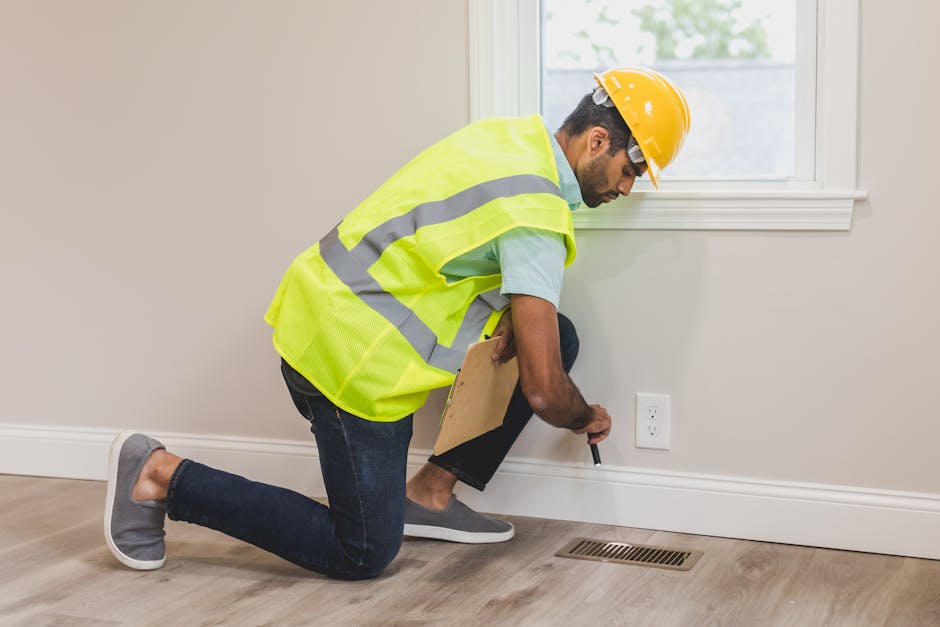
What does my Residential Warranty Home Protection denial letter actually mean?
Your denial letter is the company committing itself to a specific reason, and that commitment is useful to you. Read it for three things: the exact contract section cited, the factual finding the company made, and whether it left itself an escape hatch with vague language like "among other reasons."
A denial that cites a section number is a denial you can test. Pull that section, read it word for word, and ask whether the facts the company found actually satisfy every element of the clause. Exclusions are usually written with conditions, and all of them have to be met. If the maintenance exclusion requires that the failure be "caused by" lack of maintenance, then the company needs a causal link, not just an observation that your unit is dusty.
A denial with no section citation is a different problem. Vague denials, phone denials, and letters that gesture at "the terms and conditions" without specifying which term make it hard to know what you are contesting. If that is what you received, your first written move is to request a specific citation. Put it in writing and keep the copy.
Pay attention to what the letter says about the inspecting technician. If the company relied on a contractor's report, that report is a document you can request. Sometimes the technician's written findings do not match the denial reason the company put in the letter, and that gap matters. Also note any deadline in the letter, whether for an appeal, a reconsideration request, or a second opinion. Missing an internal deadline complicates things even when it does not extinguish your rights.
How do I read my contract against the denial reason?
Set the denial letter next to the contract and work provision by provision, because a denial only holds up if the contract language actually says what the company says it says. Start with the coverage grant, not the exclusions.
The structure of nearly every service contract runs in this order: what is covered, what is excluded, what limits apply, and what you must do. Work in that order. First confirm the system or appliance appears in the covered list, including the specific component that failed. A covered "air conditioning system" may or may not include the line set, the ductwork, or the thermostat, and the component breakdown usually appears in a separate part of the document than the headline coverage list.
Then read the cited exclusion narrowly. Under general Florida contract principles, ambiguous language in a contract drafted by one party is construed against the drafter, and exclusions are read narrowly rather than expansively. That principle does not decide your case, but it is why the precise wording matters so much. "Improper installation" and "installation not conforming to code at the time of installation" are very different standards, and only one of them is satisfied by a code change that happened after your unit went in.
Next check the limits. Aggregate annual caps, per-item caps, and separate limits for things like refrigerant or code upgrades all sit in the fine print, and they are the usual source of underpayment disputes. Finally, read your obligations: notice deadlines, the requirement to use an authorized technician, and any pre-authorization language. A denial premised on your failure to follow a procedure is worth checking against what the contract actually required.
What should I document before I respond to the denial?
Build the file before you write the appeal, because your response is only as strong as the documents behind it. Assemble everything below and keep it organized in one place, digital and physical.
- The complete contract, including declarations, schedules, endorsements, and any documents incorporated by reference. Not the marketing brochure. The operative contract.
- The full claim file trail: your claim submission, confirmation numbers, dates of every call, names of every representative, and what each one told you.
- The denial letter and any prior correspondence, in the form you received it, with envelopes or email headers showing dates.
- The service technician's report, requested in writing if you do not already have it.
- An independent diagnosis from a licensed contractor, in writing, stating the cause of failure and the cost to repair or replace. This is the single most valuable document you can add, because it directly contests the company's factual finding.
- Maintenance records: service receipts, filter purchases, contractor invoices, even credit card statements showing HVAC service charges.
- Photographs of the failed system, its data plate showing make, model, and manufacture date, and the surrounding installation.
- Proof of what you paid: premium payments, deductibles, service call fees, and any out-of-pocket repair costs you incurred after the denial.
Two habits matter more than any single document. First, move the dispute into writing. Phone calls generate no record, and a representative's verbal assurance does not survive a change in personnel. Second, keep your own timeline as you go, noting each date and each communication. Reconstructing a timeline months later from memory is far harder than maintaining one contemporaneously.

What are my options after a warranty denial in Florida?
You generally have four paths, and they are not mutually exclusive: a written internal appeal, a complaint to Florida regulators, a demand letter invoking your legal rights, and a lawsuit in Florida court. Which combination fits depends on the size of the loss and how the company responds to the first two.
Start with the written appeal, because it is fast, free, and forces the company to engage with your evidence. Attach the independent diagnosis, cite the contract provision that grants coverage, and address the specific exclusion the company invoked. Ask for a written response by a stated date.
The legal framework behind the appeal is worth understanding. Florida's Service Warranty Association Act, Fla. Stat. ch. 634, Part III, governs service warranty associations doing business in this state, including licensing and the regulation of their contracts and conduct. Separately, the Florida Deceptive and Unfair Trade Practices Act, Fla. Stat. § 501.204, prohibits unfair or deceptive acts in trade or commerce, which is the provision that can reach a systematic pattern of misrepresenting coverage or handling claims unfairly. Where your contract is a written warranty on a consumer product, the federal Magnuson-Moss Warranty Act, 15 U.S.C. 2301, may also apply to the claim.
The arbitration question, and why it matters here
This is the point most consumers do not know. The Florida-approved version of the Residential Warranty Home Protection contract contains no mandatory arbitration clause. That means a Florida policyholder keeps the right to bring a denied or underpaid claim in a Florida court, before a judge, on the public record.
The practical difference is substantial. Where a mandatory arbitration clause applies, a consumer is typically pushed into a private forum chosen and often partly paid for by the company, with limited discovery and almost no appeal. Without such a clause, the ordinary rules apply: you can file suit, use the discovery process to obtain the company's internal claim notes and the technician's actual findings, and have a Florida judge decide what the contract means. Retaining that right is leverage in itself, and it changes the calculus of an appeal, because a company that knows a denial can be tested in open court evaluates that denial differently.
| Option | What it does | When it fits |
|---|---|---|
| Written internal appeal | Forces a documented reconsideration on your evidence | Always the first step after any denial |
| Regulatory complaint | Creates a record with Florida regulators overseeing service warranty associations | When the appeal is ignored or answered without reasoning |
| Demand letter | States the contractual and statutory basis and the amount sought | Before filing, especially on larger losses |
| Suit in Florida court | Judicial determination, with discovery into the company's file | Available because no arbitration clause bars it |
An attorney review is most useful at the point where the contract language and the denial reason diverge, because that is where a case is either built or abandoned. Reviewing the denial and the contract together is a concrete step, separate from any promise about what a claim is worth. See If You Qualify →
Frequently asked questions
Can I sue Residential Warranty Home Protection in Florida court over a denied claim?
Yes. The Florida-approved version of the Residential Warranty Home Protection contract contains no mandatory arbitration clause, so a Florida policyholder retains the right to file suit in a Florida court over a denied or underpaid claim rather than being forced into private arbitration. Whether filing suit is the right step in your situation depends on the contract language, the denial reason, and the amount at issue.
What law governs home warranty companies in Florida?
Florida's Service Warranty Association Act, Fla. Stat. ch. 634, Part III, governs service warranty associations operating in Florida. The Florida Deceptive and Unfair Trade Practices Act, Fla. Stat. § 501.204, separately prohibits unfair or deceptive acts in trade or commerce. For written warranties on consumer products, the federal Magnuson-Moss Warranty Act, 15 U.S.C. 2301, may also apply.
The company says my failure was a pre-existing condition. Can I challenge that?
Yes. A pre-existing condition finding is a factual conclusion, usually drawn after a brief inspection and without any baseline inspection performed before coverage began. The most direct way to contest it is a written diagnosis from an independent licensed contractor identifying the actual cause of failure and, where possible, its timing. Also confirm the exclusion's exact wording, since some versions require the company to show the condition was known or detectable before the contract started.
My claim was approved but the payment does not cover the repair. Is that a denial?
Functionally, yes, and it should be handled the same way. Underpayment usually traces to a per-item or annual dollar cap, a decision to repair rather than replace, or a cash offer based on the company's pricing rather than market repair costs. Read the limits section of your contract, obtain a written estimate from a licensed contractor, and appeal in writing with both documents attached.
How long do I have to act after a denial in Florida?
Two separate clocks run. Your contract may set an internal deadline for appeals, reconsideration, or requesting a second opinion, and that deadline is stated in the document. Separately, Florida statutes of limitations govern how long you have to file suit on a contract claim, and the applicable period depends on the type of claim and when it accrued. Because the two clocks differ, it is worth having the dates reviewed early rather than after one has passed.
A denial is the beginning of the dispute, not the end of it. The contract you paid for still says what it says, the exclusion the company cited still has to fit the facts, and in Florida, no arbitration clause stands between you and a courtroom. See If You Qualify →
Legal Disclaimer
This page is general information, not legal advice, and does not create an attorney-client relationship. Florida law changes and every warranty dispute depends on its own facts and the specific contract language. For advice on your situation, See If You Qualify → — free, no obligation.
Find Out If You Qualify — Free Case Review
No fees unless we win · 100% confidential · Same-day response
★★★★★ 4.7 · 67 Google Reviews
What Our Clients Say
Real reviews from real clients who fought their insurance companies — and won.
"Citizens denied our roof leak claim, but this firm fought for us and got money for our repairs. We even had funds left over after fixing the roof."
"Pierre and his team are amazing. They truly cater to their clients and help you get the most from your insurance company."
"When my insurance company denied my roof damage claim, Louis Law Group stepped in and fought for me. I'm extremely satisfied with the results they obtained."
"They accomplished exactly what they set out to do and helped me finally receive my insurance check."
"Louis Law Group handled our homeowners insurance dispute and got results much faster than we expected. Excellent service and great communication."
"Very professional attorneys with outstanding attention to detail. They will not stop fighting for their clients."
* Reviews from Google. Results may vary by case.
How it Works
No Win, No Fee
We like to simplify our intake process. From submitting your claim to finalizing your case, our streamlined approach ensures a hassle-free experience. Our legal team is dedicated to making this process as efficient and straightforward as possible.
You can expect transparent communication, prompt updates, and a commitment to achieving the best possible outcome for your case.
Free Case EvaluationLet's get in touch
We like to simplify our intake process. From submitting your claim to finalizing your case, our streamlined approach ensures a hassle-free experience. Our legal team is dedicated to making this process as efficient and straightforward as possible.
12 S.E. 7th Street, Suite 805, Fort Lauderdale, FL 33301