
NRG Protects Warranty Claim Denied in Florida? Your Legal Rights
NRG Protects warranty claim denied in Florida? Know your rights under Florida law and how a dispute attorney can help. See if you qualify — free, no obligation.

6/17/2026 | 1 min read
Warranty Claim Denied? See If You Qualify
Take our 2-minute qualifier and find out if your denied warranty or service-contract claim qualifies for representation — at no cost.
See If You Qualify — Free Eligibility Check →No fees unless we win · Takes under 2 minutes · No obligation
If NRG Protects denied or underpaid your Florida claim, ask for the denial in writing, get a complete copy of your contract, compare the stated reason to the exact contract language it cites, document the failed part and every repair record, and respond in writing. Florida law regulates service warranty companies, and this contract leaves your right to sue intact.
Why do warranty companies deny valid claims?
Most denials come from a small set of contract clauses that get applied broadly, not from a finding that your part never failed. A service contract is a promise to pay for covered breakdowns, and every dollar paid out is a cost to the company. That creates pressure to read exclusions expansively and to resolve close calls in the company's favor.
The reasons that show up again and again in Florida warranty disputes include:
- Pre-existing condition. The company argues the failure started before your coverage began or during a waiting period, often without inspecting the item before the contract was sold.
- Lack of maintenance. A missing service record becomes the entire basis for the denial, even when the failure has nothing to do with maintenance.
- Improper installation or prior repair. Work done by a previous owner or a prior contractor is used to void coverage on the whole system.
- Not a covered component. The failed part is recharacterized as a subpart, an accessory, or a "wear item" that sits outside the covered list.
- Consequential or secondary damage. The company pays for the failed part but refuses everything the failure damaged downstream.
- Payment caps and aggregate limits. This is the classic underpayment. Coverage is admitted, then the payment is squeezed by a per-item cap, a labor-rate schedule, or a total contract limit you were never walked through at sale.
None of those reasons is automatically wrong. Each of them is only as strong as the specific contract language behind it and the evidence supporting it. That is precisely why a denial letter is a starting point for a dispute, not the end of one.
Disputes like this are also not unusual. The BBB business profile for NRG Protects, Inc. shows 1 complaint total in the last 12 months, with the leading category being Product Issues at 1 complaint (100 percent of that window's total). That number is small, and it should be read for what it is: the complaints that consumers formally escalated to the BBB in that window, not a count of every disputed claim. Most people who get a denial letter never file anything anywhere. They either accept the denial or pay out of pocket.

What does my NRG Protects denial letter actually mean?
Your denial letter is the company's written position on why it will not pay, and it locks that company into a specific reason you can test. Read it as a legal document, not as a final answer. The single most important thing in it is the contract provision it relies on.
Work through the letter line by line and pull out four things:
- The exact reason given. Write it down in the company's own words, not your summary of it.
- The contract section cited. If the letter denies coverage but never quotes or cites a section, that gap matters. A denial that rests on no identified language is a denial with nothing under it.
- What evidence it relies on. A technician's report, a photo, a phone note, an inspection. Ask for a copy of everything referenced.
- What it does not say. Many letters deny on one narrow ground and stay silent on the rest of the claim. Silence is not agreement, but it does narrow the fight.
Underpayment letters deserve the same treatment. A partial payment with a short explanation is still a coverage decision. If the company paid the part but not the labor, or applied a cap you did not know existed, ask in writing for the provision that authorizes each reduction and the math behind the number.
If the denial came by phone, request it in writing. A verbal denial is difficult to hold anyone to and easy to walk back later.
How do I read my contract against the reason they gave?
Line up the denial reason next to the contract text and ask whether the words actually cover your situation. This is where most denials either hold up or fall apart, and it is work you can start yourself before you talk to anyone.
Request the full contract, not the brochure or the summary page. You want the complete terms and conditions, the declarations or coverage page showing your plan and effective dates, any addenda, and the covered-components list. Then run the comparison:
| Denial reason given | What to check in the contract |
|---|---|
| Pre-existing condition | How the contract defines it, whether it requires knowledge or detectability, the waiting period length, and whether the company inspected before selling you coverage |
| Lack of maintenance | Whether records are actually required, in what form, and whether the contract requires a causal link between the missed maintenance and this failure |
| Not a covered component | The covered-components list and the exclusions list, read together. If the part appears on both, or on neither clearly, that ambiguity is worth pressing |
| Improper prior repair | Whether the clause voids coverage system-wide or only for the affected part |
| Payment reduced by a cap | The per-item limit, the aggregate limit, the labor-rate schedule, and how much of your aggregate has already been used |
Two things frequently turn up in this exercise. First, the exclusion the letter names is narrower than the way the letter applies it. Second, the letter cites a general condition rather than a real exclusion, which is a different and weaker argument. Either finding gives you something concrete to say in your response.
Florida also gives this contract a regulatory backdrop. Service warranty companies operating in Florida are governed by the Florida Service Warranty Association Act, Fla. Stat. ch. 634, Part III, which sets requirements for how these companies are licensed and how their contracts operate in this state. Separately, the Florida Deceptive and Unfair Trade Practices Act, Fla. Stat. § 501.204, prohibits unfair or deceptive acts in trade or commerce, which can be relevant when the way a contract was sold or administered differs from what was promised. Where your coverage functions as a written warranty on a consumer product, the federal Magnuson-Moss Warranty Act, 15 U.S.C. § 2301, may also apply.
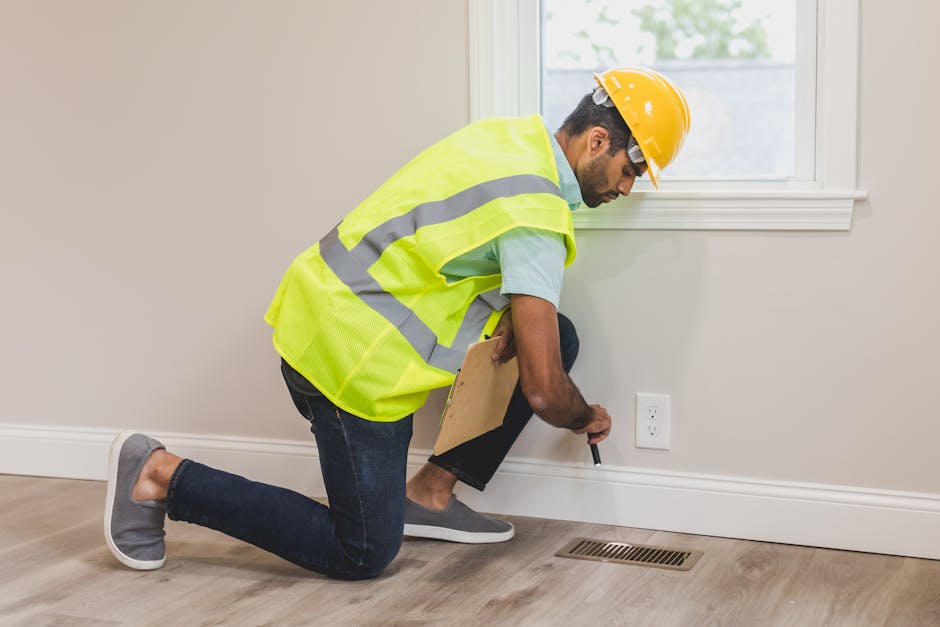
What should I document before I respond to the denial?
Build the file before you argue, because the evidence gets harder to collect the longer you wait and the repair sits unfinished. Everything below is ordinary paperwork you can gather in an afternoon.
- The full contract and every attachment, plus proof of purchase and the date coverage started.
- The written denial or the payment breakdown showing what was reduced and why.
- The technician's diagnosis, including the report the company's own contractor submitted. Ask for it directly.
- Photographs of the failed component before it is replaced or discarded, plus photos of any resulting damage.
- The failed part itself, if you can keep it. Once it goes in a dumpster, the cause of failure becomes an argument between experts instead of a fact.
- Maintenance and service records, even partial ones. Receipts, invoices, and appointment confirmations all help.
- A communication log. Every call with the date, time, who you spoke with, the claim number, and what was said. Follow important calls with a short confirming email so the record exists in writing.
- Your out-of-pocket costs, with invoices, for repairs you had to fund yourself.
One practical warning. If a claim is denied and you need the repair done immediately, take detailed photos and keep the removed part before authorizing the work. Necessary repairs do not waive your dispute, but destroyed evidence makes the dispute much harder to prove.
What are my options after a denial in Florida?
You generally have four paths, and they can be pursued in order: an internal appeal, a regulatory complaint, a formal demand, and a lawsuit in Florida court. Nothing about a denial letter requires you to stop at the first one.
1. Written appeal or reconsideration. Send a letter that quotes the denial reason, quotes the contract language, and explains why the language does not reach your facts. Attach your documentation. Ask for a written response by a specific date. This is where a careful contract reading pays off, because you are answering their stated ground rather than arguing generally that the denial felt unfair.
2. Regulatory complaint. Service warranty associations are regulated in Florida under chapter 634, and consumer complaints can be filed with the state. A complaint does not force payment, but it creates an official record and often produces a more considered written response.
3. Formal demand through counsel. A demand letter from an attorney reframes the dispute around the contract terms and the statutes that apply. It also signals that the file is being handled as a potential claim rather than a customer-service ticket.
4. Suit in Florida court. This is the point that matters most for NRG Protects contract holders. The Florida-approved version of this contract contains no mandatory arbitration clause. That is a meaningful difference from many service contracts sold nationally. It means you are not required to take a denied or underpaid claim into private arbitration under rules the company selected. You keep the right to bring the dispute before a Florida court, with the procedural protections that come with it, including discovery into how the claim was actually handled internally.
If your coverage qualifies as a written warranty on a consumer product, the Magnuson-Moss Warranty Act may provide an additional federal path. And where the contract was sold or administered in a way that is unfair or deceptive, FDUTPA may apply alongside a straightforward breach of contract claim.
An attorney review at this stage is focused on two questions: does the contract language actually support the reason they gave, and what evidence would be needed to show it does not. That is a review of the denial and the contract, not a prediction about what any particular case is worth.
Frequently asked questions
Can I sue NRG Protects in Florida, or am I forced into arbitration?
The Florida-approved version of the NRG Protects contract does not contain a mandatory arbitration clause, so a Florida policyholder keeps the right to bring a denied or underpaid claim in a Florida court. Confirm the point against your own contract copy, including any addenda, since terms can differ by version and by the state where the contract was issued.
Does a denial letter mean my claim is finished?
No. A denial is the company's written position on one specific ground, and that ground can be tested against the contract language it relies on. Many denials are reconsidered after a written appeal that quotes the actual exclusion and attaches the technician's report, photographs, and service records the original decision did not account for.
What if NRG Protects approved my claim but paid far less than the repair cost?
Treat an underpayment as a coverage decision and dispute it the same way. Ask in writing for the exact provision authorizing each reduction, whether a per-item cap or an aggregate limit was applied, how much of your aggregate limit remains, and the labor-rate calculation behind the number. Caps and rate schedules only apply as far as the contract text actually allows.
What Florida laws apply to a service warranty dispute?
Florida's Service Warranty Association Act, Fla. Stat. ch. 634, Part III, governs service warranty companies operating in Florida. The Florida Deceptive and Unfair Trade Practices Act, Fla. Stat. § 501.204, prohibits unfair or deceptive practices in trade or commerce. For written warranties on consumer products, the federal Magnuson-Moss Warranty Act, 15 U.S.C. § 2301, may also apply.
How many complaints has NRG Protects received?
The BBB business profile for NRG Protects, Inc. shows 1 complaint total in the last 12 months, all of it categorized as Product Issues. That figure counts only complaints formally escalated to the BBB during that window, so it does not reflect the number of claims actually disputed. Source: BBB business profile.
Reviewing your denial
The useful first step is comparing what the denial says against what your contract says. If those two do not line up, you have a documented basis to push back, and in Florida you are not locked out of court while you do it. A review of your denial letter and your contract can tell you which of the paths above fits your situation.
Legal Disclaimer
This page is general information, not legal advice, and does not create an attorney-client relationship. Florida law changes and every warranty dispute depends on its own facts and the specific contract language. For advice on your situation, See If You Qualify → — free, no obligation.
Find Out If You Qualify — Free Case Review
No fees unless we win · 100% confidential · Same-day response
★★★★★ 4.7 · 67 Google Reviews
What Our Clients Say
Real reviews from real clients who fought their insurance companies — and won.
"Citizens denied our roof leak claim, but this firm fought for us and got money for our repairs. We even had funds left over after fixing the roof."
"Pierre and his team are amazing. They truly cater to their clients and help you get the most from your insurance company."
"When my insurance company denied my roof damage claim, Louis Law Group stepped in and fought for me. I'm extremely satisfied with the results they obtained."
"They accomplished exactly what they set out to do and helped me finally receive my insurance check."
"Louis Law Group handled our homeowners insurance dispute and got results much faster than we expected. Excellent service and great communication."
"Very professional attorneys with outstanding attention to detail. They will not stop fighting for their clients."
* Reviews from Google. Results may vary by case.
How it Works
No Win, No Fee
We like to simplify our intake process. From submitting your claim to finalizing your case, our streamlined approach ensures a hassle-free experience. Our legal team is dedicated to making this process as efficient and straightforward as possible.
You can expect transparent communication, prompt updates, and a commitment to achieving the best possible outcome for your case.
Free Case EvaluationLet's get in touch
We like to simplify our intake process. From submitting your claim to finalizing your case, our streamlined approach ensures a hassle-free experience. Our legal team is dedicated to making this process as efficient and straightforward as possible.
12 S.E. 7th Street, Suite 805, Fort Lauderdale, FL 33301