
First-Party Property Insurance Claim Denials in Florida: Statutory Framework and Policyholder Remedies
A technical guide to denied Florida property insurance claims: the Chapter 627 framework, statutory deadlines, the 2022 SB 2-A reforms, pre-suit notice, and remedies.

7/8/2026 | 1 min read
See If You Have a Strong Insurance Claim
Take our 2-minute qualifier and find out if you're a strong candidate for representation — at no cost.
See If You Qualify — Free Eligibility Check →No fees unless we win · Takes under 2 minutes · No obligation
First-party property insurance claim denials in Florida: statutory framework and policyholder remedies
A denied first-party property insurance claim in Florida is governed by a defined statutory scheme in Chapter 627 of the Florida Statutes, not by the insurer's discretion alone. That scheme imposes fixed deadlines for acknowledgment, investigation, and payment; requires a pre-suit notice before litigation; and preserves a statutory bad-faith remedy for improper claim handling. The 2022 reforms under Senate Bill 2-A materially altered the procedure and the fee landscape, so the analysis now depends heavily on the policy's issuance date and the date of loss.
This guide sets out the operative statutes, the insurer's duties, the grounds commonly cited for denial, and the remedies available to a policyholder.
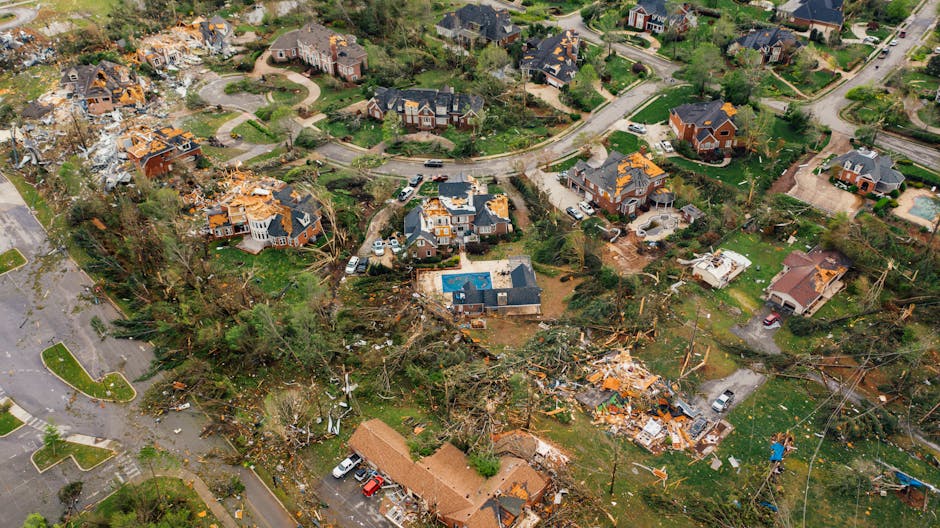
The statutory framework governing first-party property claims
"First-party" means a claim the policyholder brings under their own policy, as distinct from a liability (third-party) claim. Florida regulates these claims primarily through the following provisions:
- Section 627.70131 governs the insurer's timelines for acknowledging, investigating, and paying or denying a claim.
- Section 627.7142 codifies the Homeowner Claims Bill of Rights, which the insurer must furnish to residential policyholders.
- Section 626.9541 defines unfair claim settlement practices, and Section 624.155 provides the civil remedy through which a policyholder may pursue statutory bad faith.
- Section 627.70152 establishes the mandatory pre-suit notice procedure for suits under a property insurance policy.
Because these are statutory duties, an insurer's failure to comply is not merely a customer-service issue. It can create distinct legal exposure independent of the coverage dispute itself.
Insurer duties and statutory deadlines
Section 627.70131, as amended effective March 1, 2023, compresses the timelines that previously governed claim handling. The current deadlines for residential property claims are:
| Insurer obligation | Statutory deadline (current) | Prior deadline |
|---|---|---|
| Acknowledge a claim communication | 7 days | 14 days |
| Begin investigation | 7 days | 14 days |
| Conduct any physical inspection | 30 days | 45 days |
| Pay or deny the claim (in whole or part) | 60 days after notice | 90 days |
The 60-day pay-or-deny obligation runs from receipt of notice of the claim, subject to factors beyond the insurer's control. Missing these deadlines does not automatically establish coverage, but it is probative evidence of improper claim handling and can support interest and bad-faith exposure.

Grounds insurers commonly cite to deny or underpay a claim
Denials and underpayments in Florida typically rest on one of the following bases. Each is fact-dependent and subject to challenge:
- Excluded peril or cause. The insurer attributes the loss to an excluded cause, such as long-term wear, wind-driven rain limitations, or flood, which is generally covered separately under the National Flood Insurance Program.
- Pre-existing or gradual damage. The insurer characterizes the loss as pre-dating the policy period or as ongoing deterioration rather than a sudden event.
- Failure to mitigate. The insurer asserts the policyholder did not take reasonable steps to prevent further damage after the loss, as the policy's duties-after-loss provisions require.
- Late notice. The insurer contends the claim was not reported within the statutory window (see below), asserting prejudice to its investigation.
- Valuation disputes. The insurer acknowledges coverage but issues payment below the cost of repair, frequently by disputing scope, applying depreciation, or withholding replacement-cost holdback.
The 2022 SB 2-A reforms every policyholder must account for
Senate Bill 2-A, signed December 16, 2022, made structural changes that govern most current policies. The material points:
- Claim-notice deadlines shortened. Notice of a new or reopened claim must be given within one year of the date of loss (reduced from two years). A supplemental claim must be noticed within 18 months (reduced from three years).
- One-way attorney's fees eliminated. For suits arising under a residential or commercial property insurance policy, the one-way fee entitlement in Section 627.428 (and related provisions) no longer applies. The proposal-for-settlement mechanism under Section 768.79 now governs fee exposure instead.
- Assignment of benefits prohibited. Post-loss benefits under residential property policies issued or renewed on or after January 1, 2023, may not be assigned to third parties.
The fee change is significant but not universal. Florida appellate authority has held that the elimination of the fee entitlement is not retroactive, so a policyholder whose policy and loss predate the reform may retain the prior fee rights. The controlling analysis turns on specific dates and requires case-by-case review.

The mandatory pre-suit procedure under Section 627.70152
Before filing suit against a property insurer, a policyholder must serve a written pre-suit notice under Section 627.70152. The notice must state the amount in dispute and the specific facts of the claim, and it must be served at least ten business days before suit. The insurer then has an opportunity to respond with an offer to settle, a request to inspect, or a denial. Compliance is a condition precedent to litigation, and failure to serve a compliant notice can result in dismissal.
Statutory bad faith and the civil remedy notice
Where an insurer handles a claim unfairly, Section 624.155 provides a statutory bad-faith remedy, measured against the unfair claim settlement practices enumerated in Section 626.9541. The process requires the policyholder to file a Civil Remedy Notice with the Department of Financial Services and to allow a 60-day cure period. In the first-party context, a bad-faith action generally cannot proceed until the underlying coverage and damages have been resolved in the policyholder's favor. Bad-faith exposure is what gives the statutory deadlines their force.
How Florida courts treat these disputes
First-party property litigation is heavily developed in Florida's District Courts of Appeal. Decisions such as American Integrity Insurance Co. of Florida v. Branford (Fla. 2d DCA 2021), Gulfstream Property & Casualty Insurance Co. v. Coley, 225 So. 3d 906 (Fla. 4th DCA 2017), and Dias v. Universal Property and Casualty Insurance Co. (Fla. 3d DCA 2021) reflect recurring disputes over notice, appraisal, and the scope of coverage. The practical lesson is consistent: the outcome turns on the policy language, the documentary record, and strict compliance with statutory procedure.
Frequently asked questions
Is a denial letter the final word on my claim? No. A denial reflects the insurer's position. The policyholder may dispute scope and valuation, invoke appraisal where the policy provides it, serve a pre-suit notice, and, if necessary, litigate.
How long do I have to report a property loss in Florida? Under current law, notice of a new or reopened claim must be given within one year of the date of loss, and a supplemental claim within 18 months. Older policies may be subject to the prior, longer deadlines.
Can I still recover attorney's fees from the insurer? For most current residential and commercial property policies, the one-way fee statute no longer applies. Fee entitlement may survive for policies and losses predating the 2022 reform, because the change has been held non-retroactive. This requires a date-specific analysis.
Do I have to send a notice before suing my insurer? Yes. Section 627.70152 requires a compliant pre-suit notice as a condition precedent to filing suit under a property insurance policy.
Engaging counsel
Louis Law Group represents Florida policyholders in denied and underpaid first-party property insurance claims. Because the current framework is date-sensitive and procedurally strict, an early review of the policy, the denial, and the claim file is advisable. Request a case evaluation or call (833) 657-4812.
This article is a general legal overview of Florida first-party property insurance law and is not legal advice. The applicable rules depend on the specific policy, the date of loss, and the facts of each claim.
Photos via Pexels (K; Chris Shafer; Mikhail Nilov), used under the Pexels License.
Is your insurance company handling your claim fairly?
Answer 5 questions. We'll analyze your claim against Florida property insurance law and show you exactly where you stand.
General information only, not legal advice. Based on Florida insurance law and claim best practices.
Get Your Free Property Damage Checklist
24-step claim guide — protect your rights after damage to your home
Free. No spam. Unsubscribe anytime.
Sources & References
Find Out If You Qualify — Free Case Review
No fees unless we win · 100% confidential · Same-day response
★★★★★ 4.7 · 67 Google Reviews
What Our Clients Say
Real reviews from real clients who fought their insurance companies — and won.
"Citizens denied our roof leak claim, but this firm fought for us and got money for our repairs. We even had funds left over after fixing the roof."
"Pierre and his team are amazing. They truly cater to their clients and help you get the most from your insurance company."
"When my insurance company denied my roof damage claim, Louis Law Group stepped in and fought for me. I'm extremely satisfied with the results they obtained."
"They accomplished exactly what they set out to do and helped me finally receive my insurance check."
"Louis Law Group handled our homeowners insurance dispute and got results much faster than we expected. Excellent service and great communication."
"Very professional attorneys with outstanding attention to detail. They will not stop fighting for their clients."
* Reviews from Google. Results may vary by case.
How it Works
No Win, No Fee
We like to simplify our intake process. From submitting your claim to finalizing your case, our streamlined approach ensures a hassle-free experience. Our legal team is dedicated to making this process as efficient and straightforward as possible.
You can expect transparent communication, prompt updates, and a commitment to achieving the best possible outcome for your case.
Free Case EvaluationLet's get in touch
We like to simplify our intake process. From submitting your claim to finalizing your case, our streamlined approach ensures a hassle-free experience. Our legal team is dedicated to making this process as efficient and straightforward as possible.
12 S.E. 7th Street, Suite 805, Fort Lauderdale, FL 33301