
Endurance Warranty Claim Denied in Florida? Your Legal Rights
Endurance warranty claim denied in Florida? Know your rights under Florida law and how a dispute attorney can help. See if you qualify — free, no obligation.

6/17/2026 | 1 min read
Warranty Claim Denied? See If You Qualify
Take our 2-minute qualifier and find out if your denied warranty or service-contract claim qualifies for representation — at no cost.
See If You Qualify — Free Eligibility Check →No fees unless we win · Takes under 2 minutes · No obligation
If Endurance denied your Florida claim, you can dispute it. Request the written denial and the full contract, get the shop's teardown findings in writing, match the exact exclusion cited against the contract language, then escalate. Florida's approved contract makes arbitration non-binding, so court stays open to you.
A denial letter is a position, not a verdict. It reflects one adjuster's reading of one contract provision, usually written before anyone at the company saw your vehicle. Florida law gives vehicle service contract holders a framework for pushing back, and the record shows consumers do exactly that.
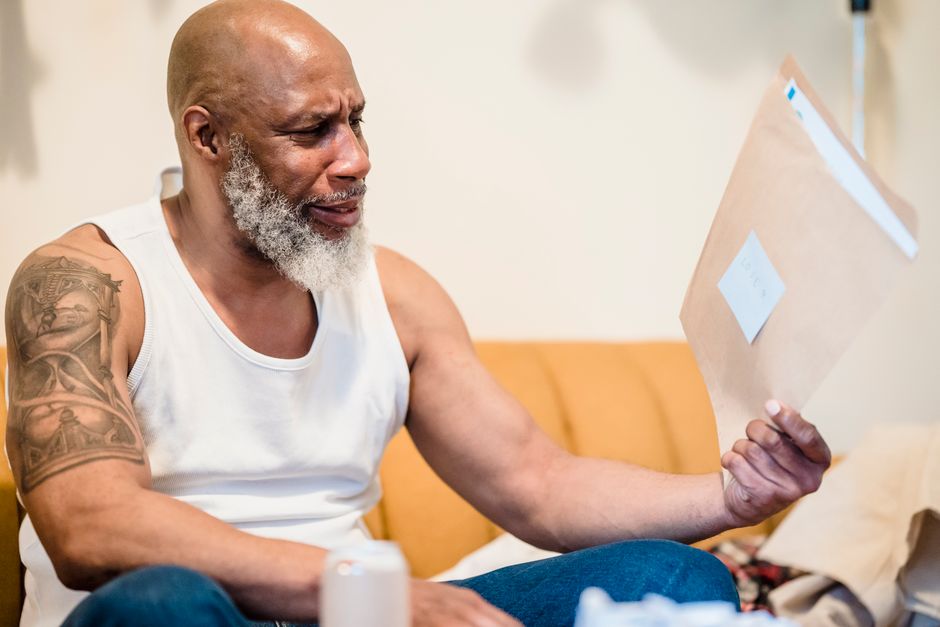
Why do warranty companies deny valid claims?
Most denials come from a small set of repeatable reasons that favor the company, not from a careful engineering review of your specific failure. The adjuster is working from a phone call with your repair shop, a claim code, and a list of contract exclusions. That process produces predictable outcomes.
The reasons that show up again and again in vehicle service contract disputes include:
- Pre-existing condition. The company asserts the failure began before your coverage started or during a waiting period, often with no inspection of the part.
- Lack of maintenance. You are asked for oil change records going back years, and any gap becomes the basis for denial, even when the failed component has no relationship to oil service intervals.
- Not a covered component. The failed part is characterized as a housing, a seal, a gasket, or a wear item rather than the covered internal component it damaged.
- Consequential damage. The company covers the part that broke but refuses the surrounding damage that the break caused.
- Betterment or aftermarket parts. Payment is reduced to a used or aftermarket part price, leaving you with the difference.
This pattern is not isolated. According to the Better Business Bureau business profile for Endurance Warranty Services, LLC, consumers filed 1,068 complaints in the last 12 months. The leading category by a wide margin was Service or Repair Issues at 800 complaints, or 75 percent of the total. Product Issues accounted for 93 (9 percent), Order Issues for 88 (8 percent), and Sales and Advertising Issues for 48 (4 percent). When three out of four complaints in a 12-month window are about service and repair, a denial is not an outlier experience. It is the center of the distribution.
Consumers also take these disputes to court. Maldonado v. Endurance Warranty Services, LLC (District Court, D. Colorado, 2025) was brought as a Magnuson-Moss written-warranty claim. Friedmann v. Endurance Warranty Services (District Court, W.D. Washington, 2025) was a breach-of-contract dispute. Rodriguez v. Endurance Warranty Services, L.L.C. (District Court, S.D. California, 2025) was filed as a putative class action. Closer to home, Collette v. Endurance Warranty Servs., LLC (District Court of Appeal of Florida, 2018) was a suit against the company in the Florida appellate system.
What does my Endurance denial letter actually mean?
Your denial letter means the company has identified one specific contract provision it believes lets it avoid paying, and it is now your move to test whether that provision actually applies to your facts. Read the letter for three things and ignore the rest of the language.
First, the exact reason. A defensible denial names a section of the contract and states a factual finding. Vague statements such as "not covered under the terms of your agreement" tell you nothing and should be met with a written request for the specific section number and the factual basis.
Second, who inspected the vehicle. Many denials rest on a telephone conversation between an adjuster and a service advisor, sometimes supplemented by an independent inspector who reviewed the vehicle for a short time. Ask in writing whether a physical inspection occurred, who performed it, and whether a written inspection report exists. That report, if it exists, is a document you are entitled to ask for.
Third, the appeal or dispute procedure. Vehicle service contracts typically contain an internal escalation path and a dispute resolution clause. Note the deadlines. Note whether the clause references arbitration, and where.
Write down the date you received the letter. Denial-related deadlines, and the statute of limitations on a contract claim, run from identifiable dates, and reconstructing them later from memory is far harder than logging them now.
How do I read my contract against the stated denial reason?
Put the denial reason and the contract side by side and look for the gap between what the letter claims and what the contract text actually says. This is the single most productive hour you can spend on your dispute.
Request your full contract, not the sales brochure and not the summary page. The document you need includes the coverage schedule, the definitions section, the exclusions, and the conditions. Then work through this comparison:
| Denial reason given | What to check in the contract |
|---|---|
| Pre-existing condition | How the contract defines pre-existing, and whether the company must show the condition existed, or you must show it did not. |
| Failure to maintain | Whether the contract requires manufacturer-recommended service or something stricter, and whether it requires a causal link between the missed service and the failure. |
| Component not covered | The definitions section. Many contracts cover "all internally lubricated parts" of an assembly, which can be broader than the adjuster's characterization. |
| Consequential damage excluded | Whether the exclusion applies to damage caused by a covered failure or only by a non-covered failure. |
| Reduced or partial payment | Limits of liability, betterment clauses, parts-sourcing provisions, and any per-claim or aggregate caps. |
Also check the contract against Florida's regulatory framework. Motor vehicle service agreement companies operating in Florida are governed by the Motor Vehicle Service Agreement Company Act, Fla. Stat. ch. 634, Part I, which sets requirements for how these agreements are issued and administered in this state. If your written agreement promises repair of a defective part, the federal Magnuson-Moss Warranty Act, 15 U.S.C. 2301, may also apply to the claim, which is the framework the plaintiff invoked in Maldonado. Where the company's sales or claims conduct was deceptive or unfair, the Florida Deceptive and Unfair Trade Practices Act, Fla. Stat. § 501.204, provides a separate consumer remedy.

What should I document before I respond to the denial?
Build the file before you argue, because the evidence that decides these disputes is created at the repair shop and disappears fast. Collect the following:
- The repair order and the technician's teardown findings. Ask the shop to write down what failed, what caused it, and whether the failure is consistent with age, mileage, or a maintenance issue. A technician's causation statement is often the strongest document in the file.
- Photographs of the failed parts. Before the shop reassembles anything. Ask the shop to preserve the failed components rather than discarding them.
- Your complete claim call history. Dates, times, names, claim numbers, and what each person told you.
- Every maintenance record you have, including receipts from quick-lube shops and your own oil and filter purchases if you service the vehicle yourself.
- The full contract, the sales materials, and any recorded sales call you can request, particularly if what you were told at purchase differs from what the contract says.
- Your out-of-pocket costs, including the diagnostic fee, the storage charges accruing at the shop, and any rental or rideshare expense.
Then respond in writing, not by phone, and keep proof of delivery. A written dispute that cites the contract section, attaches the technician's findings, and asks for the company's written basis in return creates a record that a phone call never will.
What are my options after a denial in Florida?
You generally have four paths, and they are not mutually exclusive: internal appeal, a regulatory complaint, arbitration, and a lawsuit in Florida court. Which combination fits depends on your contract language and the amount at stake.
Internal appeal
Submit the written dispute described above, with your technician's causation findings attached. Some denials are reversed at this stage simply because the company finally receives facts an adjuster never had.
Regulatory complaint
Motor vehicle service agreement companies are regulated in Florida under Fla. Stat. ch. 634, Part I. A complaint to the state regulator creates an official record and requires a company response, which can be useful whether or not it resolves your claim.
Arbitration, which in Florida is non-binding
This is the point most consumers miss. The Florida-approved version of this contract makes arbitration non-binding. If you go through arbitration and disagree with the outcome, you are not stuck with it. You can still take the claim to a Florida court. That materially changes the calculation, because an arbitration clause in the Florida-approved contract does not function as a permanent door closing on your right to be heard by a judge.
Litigation
Depending on the facts, a denied or underpaid claim may support a breach-of-contract theory, a Magnuson-Moss written-warranty claim under 15 U.S.C. 2301, a FDUTPA claim under Fla. Stat. § 501.204, or some combination. Consumers have pursued these disputes in courts around the country, including Friedmann in Washington, Rodriguez in California, and Collette in the Florida appellate system. No outcome is promised by any of these filings, and every case turns on its own contract and facts, but they establish that a corporate denial is not the end of the process.
Frequently asked questions
Is arbitration with Endurance binding in Florida?
No. The Florida-approved version of this contract makes arbitration non-binding. A policyholder who disputes the arbitration result can still bring the claim to a Florida court. Read the dispute resolution section of your own contract, and note that the Florida version may differ from versions sold in other states.
Can Endurance deny my claim for a missed oil change?
It can assert that reason, but whether it holds up depends on your contract language. Check whether your agreement requires manufacturer-recommended maintenance or something stricter, and whether it requires the company to connect the missed maintenance to the actual failure. A missed service on a system unrelated to the failed component is a very different argument from one that caused the failure.
How common are Endurance claim disputes?
The Better Business Bureau business profile for Endurance Warranty Services, LLC records 1,068 complaints in the last 12 months, with Service or Repair Issues accounting for 800 of them, or 75 percent. Product Issues (93), Order Issues (88), and Sales and Advertising Issues (48) make up the remainder.
What Florida laws apply to a vehicle service contract dispute?
Florida's Motor Vehicle Service Agreement Company Act, Fla. Stat. ch. 634, Part I, governs motor vehicle service agreement companies operating in the state. The Florida Deceptive and Unfair Trade Practices Act, Fla. Stat. § 501.204, may apply to deceptive or unfair sales or claims conduct. For written warranty promises, the federal Magnuson-Moss Warranty Act, 15 U.S.C. 2301, may also be available.
Should I let the shop reassemble my vehicle after a denial?
Ask the shop to photograph and preserve the failed components first, and to document its teardown findings in writing. Once parts are discarded and the vehicle is reassembled, the physical evidence supporting your position is gone, and the dispute becomes one adjuster's word against a repair order.
Having your denial reviewed
A review starts with two documents: the denial letter and the complete contract, read against each other. The question is whether the exclusion the company cited actually reaches the failure you experienced, and whether the way the claim was handled complies with the Florida framework that governs these agreements. That review does not promise any particular result, but it tells you whether the denial rests on contract language that holds up or on a characterization that does not.
Legal Disclaimer
This page is general information, not legal advice, and does not create an attorney-client relationship. Florida law changes and every warranty dispute depends on its own facts and the specific contract language. For advice on your situation, See If You Qualify → — free, no obligation.
Find Out If You Qualify — Free Case Review
No fees unless we win · 100% confidential · Same-day response
★★★★★ 4.7 · 67 Google Reviews
What Our Clients Say
Real reviews from real clients who fought their insurance companies — and won.
"Citizens denied our roof leak claim, but this firm fought for us and got money for our repairs. We even had funds left over after fixing the roof."
"Pierre and his team are amazing. They truly cater to their clients and help you get the most from your insurance company."
"When my insurance company denied my roof damage claim, Louis Law Group stepped in and fought for me. I'm extremely satisfied with the results they obtained."
"They accomplished exactly what they set out to do and helped me finally receive my insurance check."
"Louis Law Group handled our homeowners insurance dispute and got results much faster than we expected. Excellent service and great communication."
"Very professional attorneys with outstanding attention to detail. They will not stop fighting for their clients."
* Reviews from Google. Results may vary by case.
How it Works
No Win, No Fee
We like to simplify our intake process. From submitting your claim to finalizing your case, our streamlined approach ensures a hassle-free experience. Our legal team is dedicated to making this process as efficient and straightforward as possible.
You can expect transparent communication, prompt updates, and a commitment to achieving the best possible outcome for your case.
Free Case EvaluationLet's get in touch
We like to simplify our intake process. From submitting your claim to finalizing your case, our streamlined approach ensures a hassle-free experience. Our legal team is dedicated to making this process as efficient and straightforward as possible.
12 S.E. 7th Street, Suite 805, Fort Lauderdale, FL 33301