
Can You Sue East Coast Mechanical (ECM) Over a Warranty Claim in Florida? | Louis Law Group
East Coast Mechanical (ECM) warranty claim denied in Florida? Know your rights under Florida law and how a dispute attorney can help. See if you qualify — free, no obligation.

7/30/2026 | 1 min read
Warranty Claim Denied? See If You Qualify
Take our 2-minute qualifier and find out if your denied warranty or service-contract claim qualifies for representation — at no cost.
See If You Qualify — Free Eligibility Check →No fees unless we win · Takes under 2 minutes · No obligation
Yes. In most cases a Florida consumer can sue East Coast Mechanical (ECM) over a denied or underpaid warranty claim, because the Florida-approved version of the ECM service contract contains no mandatory arbitration clause. That means your dispute can go to a Florida court as a breach-of-contract action rather than into private arbitration.
That single detail matters more than most homeowners realize. Many extended warranty and service contract companies bury an arbitration clause in the fine print, which strips the buyer of a jury, of public court records, and often of the ability to join with other customers. When the contract does not do that, the courthouse door stays open. Below is how Florida law treats these disputes, what a claim against a home service warranty company actually involves, and what a consumer may be able to recover.
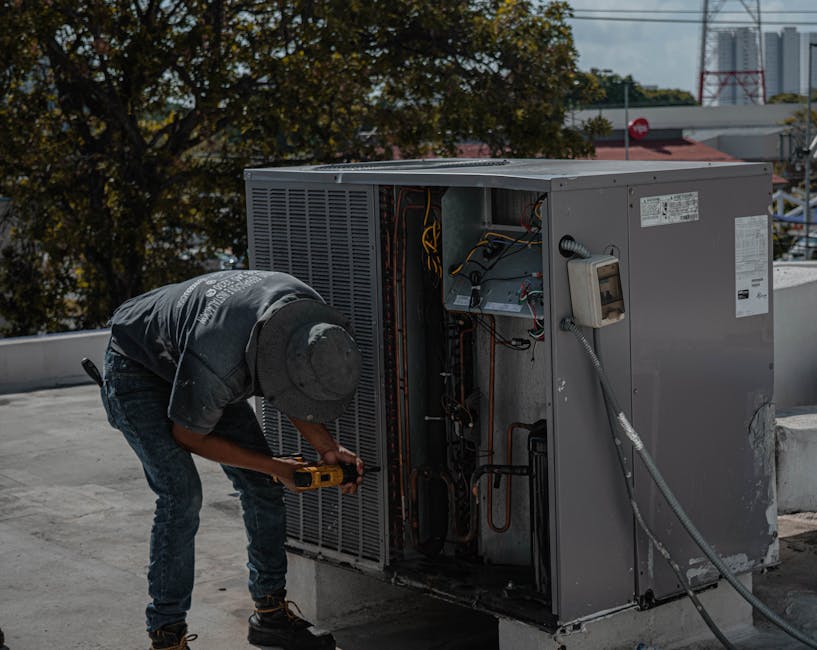
When does it make sense to sue a warranty company like ECM?
Suing generally makes sense when the contract clearly covers the failure, the company has refused to pay or has paid far less than the repair actually costs, and internal appeals have gone nowhere. Litigation is a tool for a documented coverage dispute, not a substitute for a claim that was never properly submitted.
Situations where Florida consumers most often reach that point include:
- A denial that contradicts the contract language. The company cites an exclusion that does not fit the facts, or applies a "pre-existing condition" or "lack of maintenance" label without a technical basis.
- Underpayment. Coverage is admitted, but the offered amount does not come close to the cost of a comparable repair or replacement, leaving the homeowner to fund the difference.
- Endless delay. The claim is neither approved nor denied. A Florida summer without air conditioning turns a paperwork delay into a habitability problem.
- Repeated failure of the same system. The same compressor, air handler, or water heater fails again and again, and each new claim gets treated as a brand new problem.
- Coverage sold that the consumer could never use. The exclusions, as applied by the company, swallow the coverage that was advertised at the point of sale.
Before filing, it is worth exhausting the cheap options. Get the denial in writing and ask for the specific contract provision relied on. Request the technician's report and any inspection notes. Send a written demand that quotes the coverage language and attaches an independent repair estimate. Some claims get reversed at that stage, and if they do not, that paper trail becomes the backbone of the lawsuit.
It also helps to have a lawyer read the contract and the denial side by side before you decide anything. Coverage disputes turn on definitions, exclusions, and claim-handling requirements that are easy to misread. See If You Qualify →
Can ECM force you into arbitration, or do you keep your right to court in Florida?
The Florida-approved version of the ECM service contract contains no mandatory arbitration clause, so a policyholder keeps the right to sue in a Florida court over a denied or underpaid claim. There is no arbitration provision to compel you into a private proceeding and no arbitration filing fee standing between you and a judge.
Why that is significant:
| Feature | Court (available here) | Mandatory arbitration (typical warranty contracts) |
|---|---|---|
| Decision maker | Judge, and in some cases a jury | Private arbitrator, often from a panel the company helped select |
| Public record | Filings are public, so patterns of denials become visible | Usually confidential |
| Discovery | Formal discovery of claim files and internal notes | Often limited |
| Appeal | Ordinary appellate review | Extremely narrow grounds to overturn |
One caution: contracts change over time, and the version you signed governs your rights. Different sellers, different program administrators, and different years can produce different terms. Do not assume from a web page, including this one, that your specific document is arbitration free. Pull your actual contract, including any addendum or terms delivered after purchase, and confirm what it says. That document, not a summary, controls.
What does a breach-of-contract claim against a service warranty company look like?
At its core, a claim against a home service warranty company is an ordinary Florida breach-of-contract case: there was a valid contract, the consumer performed, the company failed to do what it promised, and the consumer suffered a loss as a result. The service contract is the promise, and the denial or underpayment is the alleged breach.
Under Florida contract law, the analysis is document driven. Your lawyer builds the case from the contract itself, the claim submission, the technician's findings, the denial letter, and the independent repair estimate that shows what the covered work actually costs. Ambiguity in the drafting usually gets construed against the party that wrote the contract, which is why the exact wording of an exclusion often decides the case.
Several other bodies of law can run alongside the contract claim:
- The Service Warranty Association Act, Fla. Stat. ch. 634, Part III. Florida regulates service warranty associations, which are the companies that sell contracts covering the repair or replacement of home systems and appliances. The statute sets the framework these companies operate within, including how their contracts and claim obligations are treated in Florida.
- FDUTPA, Fla. Stat. § 501.204, which prohibits unfair or deceptive acts and practices in trade or commerce. Where a denial pattern or a sales presentation is alleged to be deceptive rather than just wrong, FDUTPA may provide a separate theory.
- The federal Magnuson-Moss Warranty Act, 15 U.S.C. 2301 and following, which governs written warranties and service contracts on consumer products and can supply an additional route for a written-warranty claim.
Which of these fits depends entirely on your facts and your document. Some cases are pure contract disputes. Others involve how the coverage was sold. Florida also has deadlines for filing, and they are shorter than most people expect, so a claim that sits for years can become unenforceable no matter how strong it looks on the merits.
What damages can you recover if you win a warranty lawsuit in Florida?
The starting point in a Florida breach-of-contract case is the benefit of the bargain: the money it takes to put you where the contract promised you would be. For a denied HVAC or appliance claim, that usually means the reasonable cost of the covered repair or replacement, less anything the contract legitimately makes you responsible for, such as a service fee or deductible.
Depending on the contract and the legal theories available, a consumer may also be able to pursue:
- Out-of-pocket costs already paid to a third-party contractor to fix a system the company should have covered.
- Amounts underpaid, meaning the gap between what the company approved and the actual cost of comparable work.
- Consequential losses that Florida contract law permits, such as related property damage traceable to the failure to repair, where the facts and the contract support it.
- Refund of premiums or contract payments, where the appropriate remedy is unwinding the deal rather than enforcing it.
- Attorney's fees and costs, which certain statutes, including FDUTPA and the Magnuson-Moss Warranty Act, may allow a prevailing consumer to seek. Fee shifting is what makes a modest repair claim economically viable to litigate.
No one can tell you what any individual case will produce, and no lawyer should promise a result. What can be assessed in advance is whether your contract covers the failure, whether the stated reason for denial holds up, and whether the loss is large enough to justify filing. See If You Qualify →
Frequently asked questions
Do I have to arbitrate my ECM warranty dispute?
Not under the Florida-approved version of the ECM service contract, which contains no mandatory arbitration clause. A policyholder therefore keeps the right to sue in a Florida court over a denied or underpaid claim. Because contract versions vary by year and seller, confirm the terms in your own signed document before relying on this.
What is the legal basis for suing a home warranty company in Florida?
Most of these cases are breach-of-contract claims under Florida contract law, since the service contract is an enforceable promise to repair or replace covered systems. Depending on the facts, a claim may also involve the Service Warranty Association Act, Fla. Stat. ch. 634, Part III, Florida's deceptive practices statute at Fla. Stat. § 501.204, or the federal Magnuson-Moss Warranty Act.
Is a denied HVAC claim worth suing over?
It can be, particularly when a compressor or full system replacement is involved and the denial conflicts with the contract language. Fee-shifting provisions in statutes such as FDUTPA and Magnuson-Moss can make smaller claims practical to pursue, and lower-value disputes may proceed in county court, including the small claims track, which is faster and less expensive than circuit court.
What documents do I need before I talk to a lawyer?
Bring the full service contract with all addenda, the written denial or payment explanation, your claim submission and any correspondence, the technician's report or inspection notes, an independent repair estimate, and proof of payments and maintenance. Those six items are usually enough to evaluate whether the denial is defensible.
How long do I have to file a warranty lawsuit in Florida?
Florida sets statutory deadlines for contract and consumer claims, and they run from a specific triggering event rather than from when you decide to act. Waiting can bar an otherwise valid claim, so the safer approach is to have the deadline that applies to your contract identified early rather than assuming there is time left.
Having the denial reviewed
A denial letter is the company's position, not a final ruling. Reviewing the contract next to the stated reason for denial frequently shows that the exclusion cited does not match what actually failed, or that the amount offered does not reflect the cost of the covered work. That review is what determines whether a case exists, and it happens before any lawsuit is filed.
Louis Law Group represents Florida consumers in disputes with warranty and service contract companies. If your ECM claim was denied, delayed, or paid at less than the repair costs, you can have the denial and the contract language evaluated. See If You Qualify →
This article is general information about Florida law and is not legal advice. It does not create an attorney-client relationship, and outcomes depend on the specific facts and the specific contract involved.
Legal Disclaimer
This page is general information, not legal advice, and does not create an attorney-client relationship. Florida law changes and every warranty dispute depends on its own facts and the specific contract language. For advice on your situation, See If You Qualify → — free, no obligation.
Find Out If You Qualify — Free Case Review
No fees unless we win · 100% confidential · Same-day response
★★★★★ 4.7 · 67 Google Reviews
What Our Clients Say
Real reviews from real clients who fought their insurance companies — and won.
"Citizens denied our roof leak claim, but this firm fought for us and got money for our repairs. We even had funds left over after fixing the roof."
"Pierre and his team are amazing. They truly cater to their clients and help you get the most from your insurance company."
"When my insurance company denied my roof damage claim, Louis Law Group stepped in and fought for me. I'm extremely satisfied with the results they obtained."
"They accomplished exactly what they set out to do and helped me finally receive my insurance check."
"Louis Law Group handled our homeowners insurance dispute and got results much faster than we expected. Excellent service and great communication."
"Very professional attorneys with outstanding attention to detail. They will not stop fighting for their clients."
* Reviews from Google. Results may vary by case.
How it Works
No Win, No Fee
We like to simplify our intake process. From submitting your claim to finalizing your case, our streamlined approach ensures a hassle-free experience. Our legal team is dedicated to making this process as efficient and straightforward as possible.
You can expect transparent communication, prompt updates, and a commitment to achieving the best possible outcome for your case.
Free Case EvaluationLet's get in touch
We like to simplify our intake process. From submitting your claim to finalizing your case, our streamlined approach ensures a hassle-free experience. Our legal team is dedicated to making this process as efficient and straightforward as possible.
12 S.E. 7th Street, Suite 805, Fort Lauderdale, FL 33301