
Broward Factory Service Warranty Claim Denied in Florida? Your Legal Rights
Broward Factory Service warranty claim denied in Florida? Know your rights under Florida law and how a dispute attorney can help. See if you qualify — free, no obligation.

6/17/2026 | 1 min read
Warranty Claim Denied? See If You Qualify
Take our 2-minute qualifier and find out if your denied warranty or service-contract claim qualifies for representation — at no cost.
See If You Qualify — Free Eligibility Check →No fees unless we win · Takes under 2 minutes · No obligation
If Broward Factory Service denied your Florida claim, you are not out of options. Request the denial in writing, pull your service agreement, and compare the exact exclusion cited against the covered-component language. Florida's Service Warranty Association Act regulates these contracts, and because the Florida-approved agreement has no mandatory arbitration clause, you keep the right to sue.
That last point matters more than most consumers realize. A large share of consumer contracts in 2026 force disputes into private arbitration, where the process is quieter, the record is sealed, and leverage tilts toward the company. The Florida-approved version of the Broward Factory Service agreement does not contain a mandatory arbitration clause, which means a Florida court remains available to you over a denied or underpaid claim. Knowing that changes how you should handle the next thirty days.
Why do warranty companies deny valid claims?
Most denials are not accusations that you are lying. They are the output of a cost-control process that reads your contract narrowly and your repair facts broadly. A service warranty company collects fixed monthly or annual payments and pays variable, unpredictable repair costs. Every claim is a margin event, and the language of the agreement gives the company several standard levers to reduce or refuse payment.
The levers repeat across the industry, and they show up in Broward Factory Service disputes the same way they show up elsewhere:
- Pre-existing condition. The failure is characterized as something that was already developing before your coverage started or before the waiting period ended.
- Lack of maintenance. The technician notes dirty coils, a clogged drain line, a neglected filter, or missing service records, and the company treats that observation as the cause of the failure rather than a coexisting condition.
- Excluded component. The failed part is placed outside the covered-component list, or is called a "cosmetic," "consequential," or "non-mechanical" item.
- Improper installation or prior repair. Work performed by an earlier contractor is blamed for the current failure.
- Coverage caps and aggregate limits. The claim is not denied outright but reduced to a per-item, per-system, or annual dollar cap that leaves you paying most of the bill. This is the underpayment scenario, and it is a dispute even though the word "denied" never appears.
None of those reasons is automatically improper. Contracts do have real exclusions, and a company is entitled to apply them. The problem arises when the stated reason does not match what the contract actually says, when the diagnosis behind the reason is thin, or when the exclusion is applied so broadly that it swallows the coverage you paid for. That is the gap a review is designed to find.
The dispute pattern is not rare. According to the BBB business profile for Broward Factory Service, in the last 12 months there were 3 complaints total, with Service or Repair Issues accounting for 2 (67%) and Sales and Advertising Issues accounting for 1 (33%). That is a small public sample, and most disputes never reach a complaint form at all, but the distribution is consistent with what consumers describe: the fight is usually about the repair itself, and sometimes about what was promised at the point of sale.

What does my Broward Factory Service denial letter actually mean?
A denial letter is the company committing itself to a specific reason, and that commitment is useful to you. Read it as a legal position rather than a verdict. Your job is to identify three things: the precise contract provision being invoked, the factual finding that supposedly triggers it, and who made that finding.
Many denials arrive by phone or through a technician's offhand comment on your driveway. That version is not usable. Ask for the denial in writing, and ask specifically for the contract section number relied on and the technician's or adjuster's written diagnostic report. A company that cannot point to a section, or that cites a section whose text does not describe your situation, has a weaker position than it appeared to have over the phone.
Watch for reasons that are conclusions dressed as facts. "Pre-existing" is a conclusion. The underlying facts might be a compressor with corrosion, or a technician's estimate of the age of a leak, or nothing more than the claim being filed early in the contract term. "Lack of maintenance" is a conclusion. The underlying fact might be a dirty filter that has no causal connection at all to the failed control board. Separating the conclusion from the evidence is the single most productive thing you can do with a denial letter.
Also check the timing. Note the date you reported the failure, the date of the inspection, the date on the letter, and any deadline the letter imposes for appeal or for obtaining a second opinion. Deadlines that appear in the letter but not in the contract are worth flagging.
How do I read my contract against the stated denial reason?
Put the denial letter and the agreement side by side and work provision by provision. Coverage in these contracts is built in layers: a grant of coverage, a covered-component list, a set of exclusions, then limits and caps. A denial has to survive all four layers, and companies sometimes reach for an exclusion without first confirming that the component is actually outside the grant.
| Stated denial reason | What to locate in your agreement |
|---|---|
| Pre-existing condition | The definition of pre-existing, the waiting period length, the effective date, and whether any inspection was required or performed at enrollment |
| Lack of maintenance | The exact maintenance duties imposed on you, whether records are required, and whether the contract requires a causal link between the lapse and the failure |
| Component not covered | The covered-component list for that system, including any "and all internal parts" or similar catch-all language |
| Improper prior repair or installation | Whether the exclusion is limited to work performed after coverage began, and whether the company inspected before issuing coverage |
| Paid less than the repair cost | Per-item, per-system, and aggregate caps, plus any "comparable replacement" or non-original-parts language |
Pay attention to renewals. If you have carried the agreement for several years, the version that governs your claim may not be the version you were handed at signing. Ask for the operative contract for your claim period, along with any amendments or endorsements.
What should I document before I respond?
Build the file before you argue. A well-documented dispute is easier to evaluate and harder to brush aside, and the documents are far easier to collect in the first weeks than months later.
- The full agreement that applies to your claim period, plus renewal notices and any sales materials or website language that described the coverage to you.
- The written denial and every prior written communication, including emails, texts, and portal messages.
- The claim history: dates you called, who you spoke with, ticket or claim numbers, and what you were told.
- The technician's report and diagnosis, requested in writing if it was not provided.
- An independent second opinion from a licensed contractor addressing cause of failure directly, not just cost of repair. Ask that professional whether maintenance history or age could reasonably explain the failure.
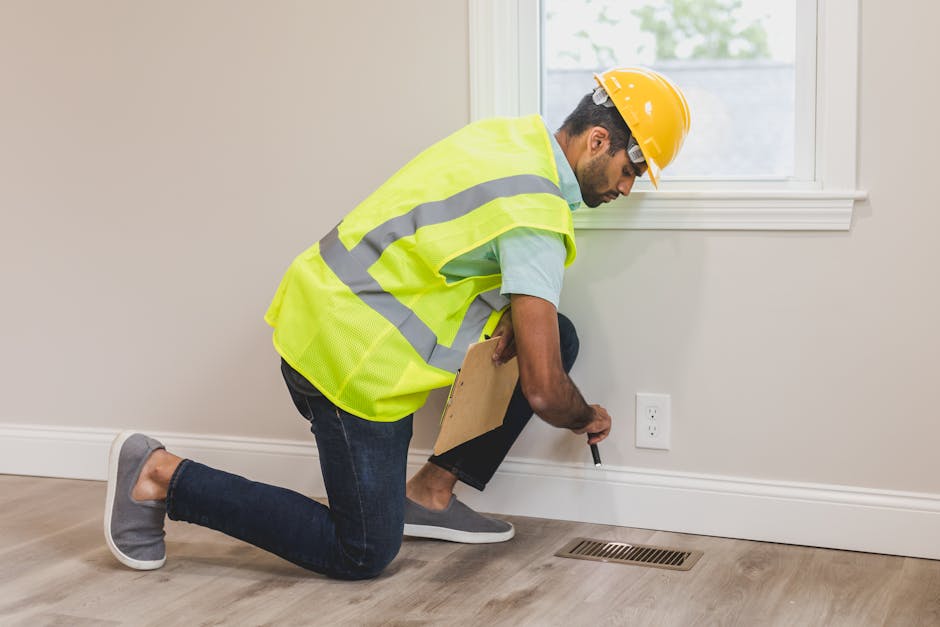
- Photographs and video of the failed equipment, model and serial plates, and any water, mold, or secondary damage.
- Proof of payment for premiums, service fees, and any out-of-pocket repair you funded yourself.
- Maintenance records, including receipts from prior service visits, filter purchases, and seasonal tune-ups.
Keep out-of-pocket costs in one place. If you had to pay for the repair yourself to keep the house livable in a Florida summer, those receipts define the size of the loss you are disputing.
What are my options after a denial in Florida?
You generally have several paths, and they are not mutually exclusive. The right sequence depends on the denial reason, the dollar amount, and how the company responds to a documented challenge.
Internal appeal or reconsideration. Send a written response that quotes the contract language, attaches the independent diagnosis, and asks the company to reconsider by a stated date. Many disputes resolve here, especially when the second opinion contradicts the technician's causal finding.
Regulatory complaint. Service warranty associations in Florida are regulated under the Service Warranty Association Act, Fla. Stat. ch. 634, Part III, which governs how these companies are licensed and how they must handle contracts and claims. A complaint to the state creates a record and sometimes prompts a substantive written response you would not otherwise receive.
Statutory consumer claims. Beyond the contract itself, the Florida Deceptive and Unfair Trade Practices Act, Fla. Stat. § 501.204, addresses unfair or deceptive acts in trade or commerce, which can be relevant where what was sold does not match what is being honored. Where a written warranty on a consumer product is involved, the federal Magnuson-Moss Warranty Act, 15 U.S.C. 2301, may also apply.
Court. This is where the absence of an arbitration clause becomes practical rather than theoretical. Because the Florida-approved Broward Factory Service agreement contains no mandatory arbitration provision, a policyholder is not funneled into a private forum and may bring a denied or underpaid claim in a Florida court. That preserves ordinary civil procedure, including discovery into the company's own claim file and internal communications about your denial.
A review at this stage is about the contract and the denial, not about a promised result. What an attorney can do is read the operative agreement against the stated reason, identify whether the exclusion was applied to facts that support it, and tell you what the realistic paths look like.
Frequently asked questions
Can I sue Broward Factory Service in Florida court, or do I have to arbitrate?
The Florida-approved version of the Broward Factory Service contract does not contain a mandatory arbitration clause, so a policyholder keeps the right to bring a denied or underpaid claim in a Florida court. Confirm the version that governs your specific claim period, since renewals and endorsements can change contract terms over time.
What does "pre-existing condition" mean in a home service warranty denial?
It means the company contends the failure was already developing before your coverage or waiting period began. It is a conclusion, not a fact, so ask for the written diagnosis supporting it. If the company never inspected your equipment before selling you coverage, and the technician's report does not actually establish when the failure began, the basis for that conclusion may be thin.
Is being paid less than the repair cost the same as a denial?
Functionally, yes, it is still a dispute. Underpayment usually comes from per-item, per-system, or annual caps, or from language allowing comparable rather than identical replacement parts. Locate the specific limit in your agreement and confirm the company applied it correctly, because a misapplied cap is as challengeable as a wrongful denial.
How common are complaints against this company?
According to the BBB business profile for Broward Factory Service, there were 3 complaints total in the last 12 months. Service or Repair Issues made up 2 of those (67%) and Sales and Advertising Issues made up 1 (33%). Public complaint counts capture only a fraction of disputes, since most consumers never file one.
What should I do first if my claim was just denied?
Get the denial in writing with the contract section cited, request the technician's diagnostic report, and obtain an independent opinion from a licensed contractor on the cause of failure. Do those three things before you accept the outcome or pay for a full replacement out of pocket, because they are much harder to reconstruct later.
A denial is the company's opening position, not the end of the matter. If you have the denial letter, your agreement, and a repair bill you were told would be covered, the next step is a review of what the contract actually says against the reason you were given.
Legal Disclaimer
This page is general information, not legal advice, and does not create an attorney-client relationship. Florida law changes and every warranty dispute depends on its own facts and the specific contract language. For advice on your situation, See If You Qualify → — free, no obligation.
Find Out If You Qualify — Free Case Review
No fees unless we win · 100% confidential · Same-day response
★★★★★ 4.7 · 67 Google Reviews
What Our Clients Say
Real reviews from real clients who fought their insurance companies — and won.
"Citizens denied our roof leak claim, but this firm fought for us and got money for our repairs. We even had funds left over after fixing the roof."
"Pierre and his team are amazing. They truly cater to their clients and help you get the most from your insurance company."
"When my insurance company denied my roof damage claim, Louis Law Group stepped in and fought for me. I'm extremely satisfied with the results they obtained."
"They accomplished exactly what they set out to do and helped me finally receive my insurance check."
"Louis Law Group handled our homeowners insurance dispute and got results much faster than we expected. Excellent service and great communication."
"Very professional attorneys with outstanding attention to detail. They will not stop fighting for their clients."
* Reviews from Google. Results may vary by case.
How it Works
No Win, No Fee
We like to simplify our intake process. From submitting your claim to finalizing your case, our streamlined approach ensures a hassle-free experience. Our legal team is dedicated to making this process as efficient and straightforward as possible.
You can expect transparent communication, prompt updates, and a commitment to achieving the best possible outcome for your case.
Free Case EvaluationLet's get in touch
We like to simplify our intake process. From submitting your claim to finalizing your case, our streamlined approach ensures a hassle-free experience. Our legal team is dedicated to making this process as efficient and straightforward as possible.
12 S.E. 7th Street, Suite 805, Fort Lauderdale, FL 33301